
Last updated November 3, 2026
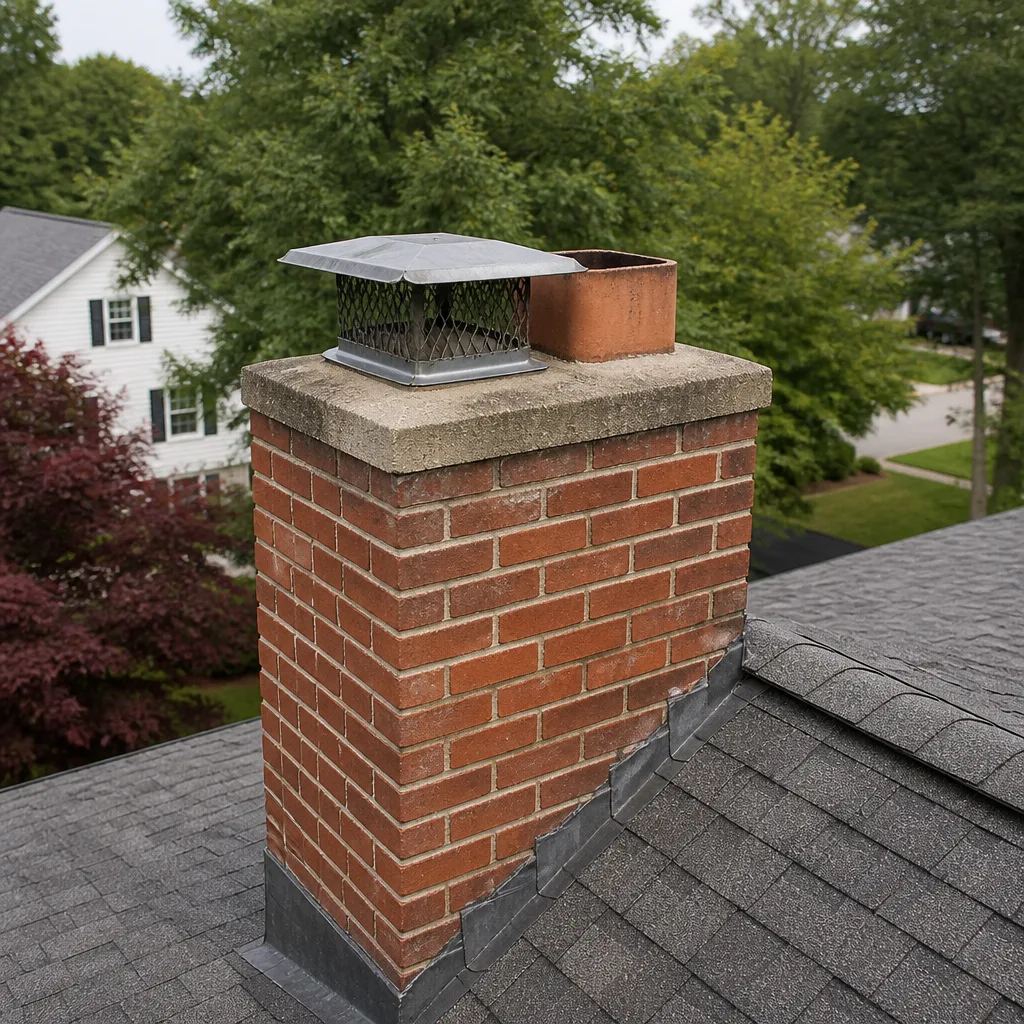 Sweep & inspection
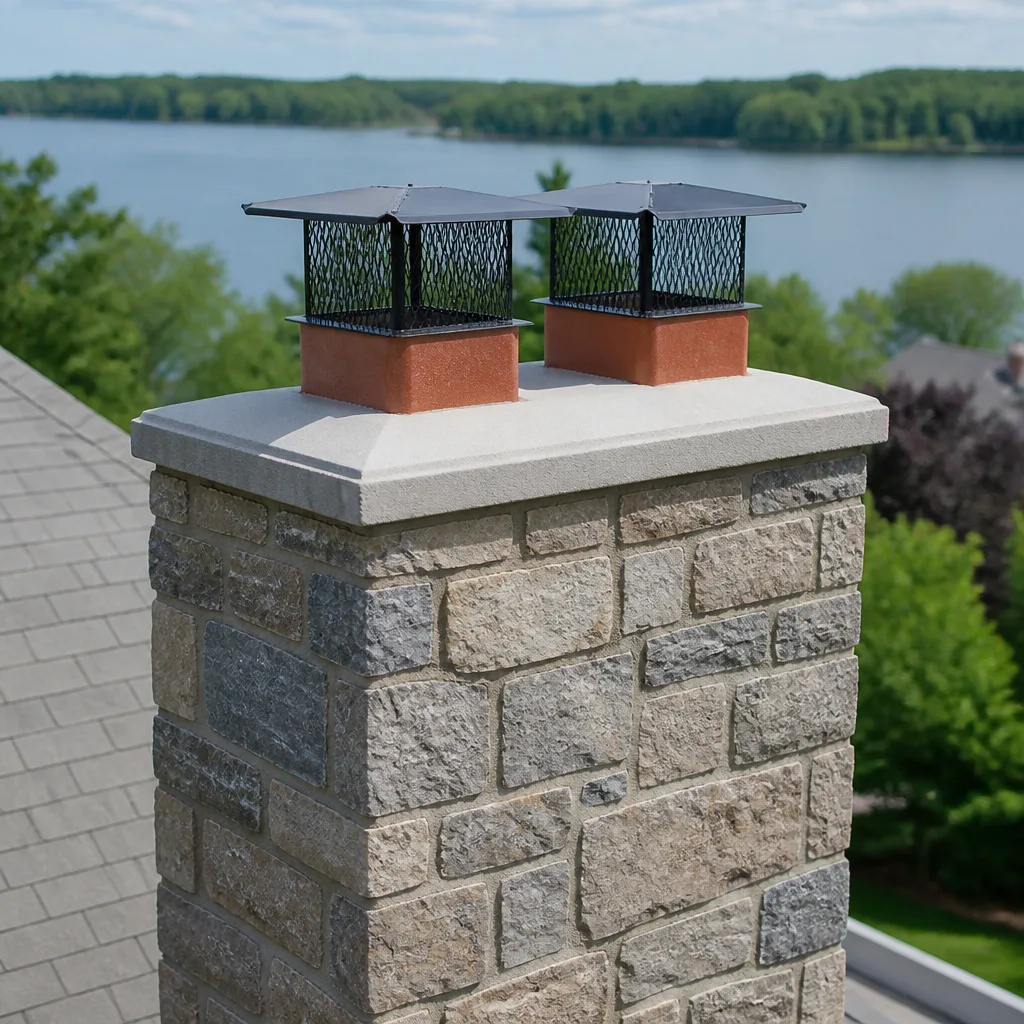 Caps & crowns
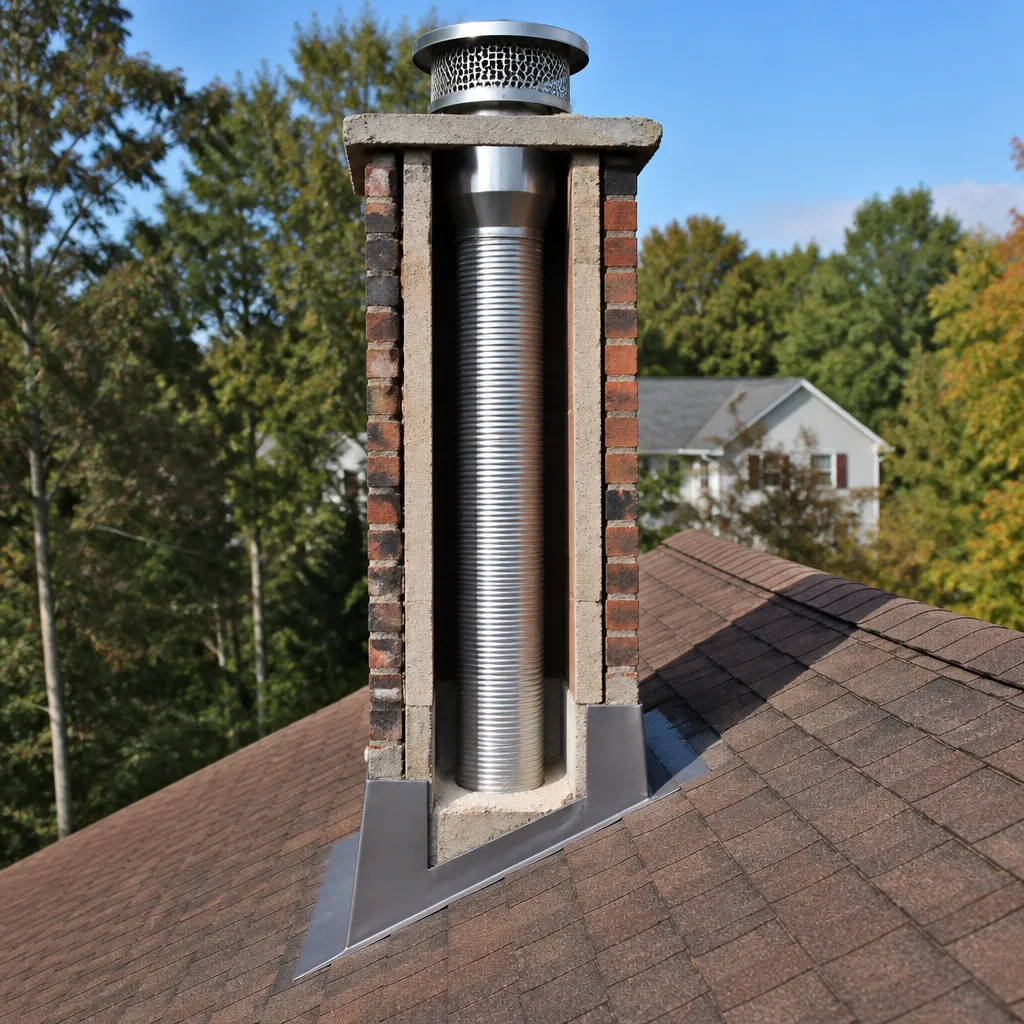 Flue relining
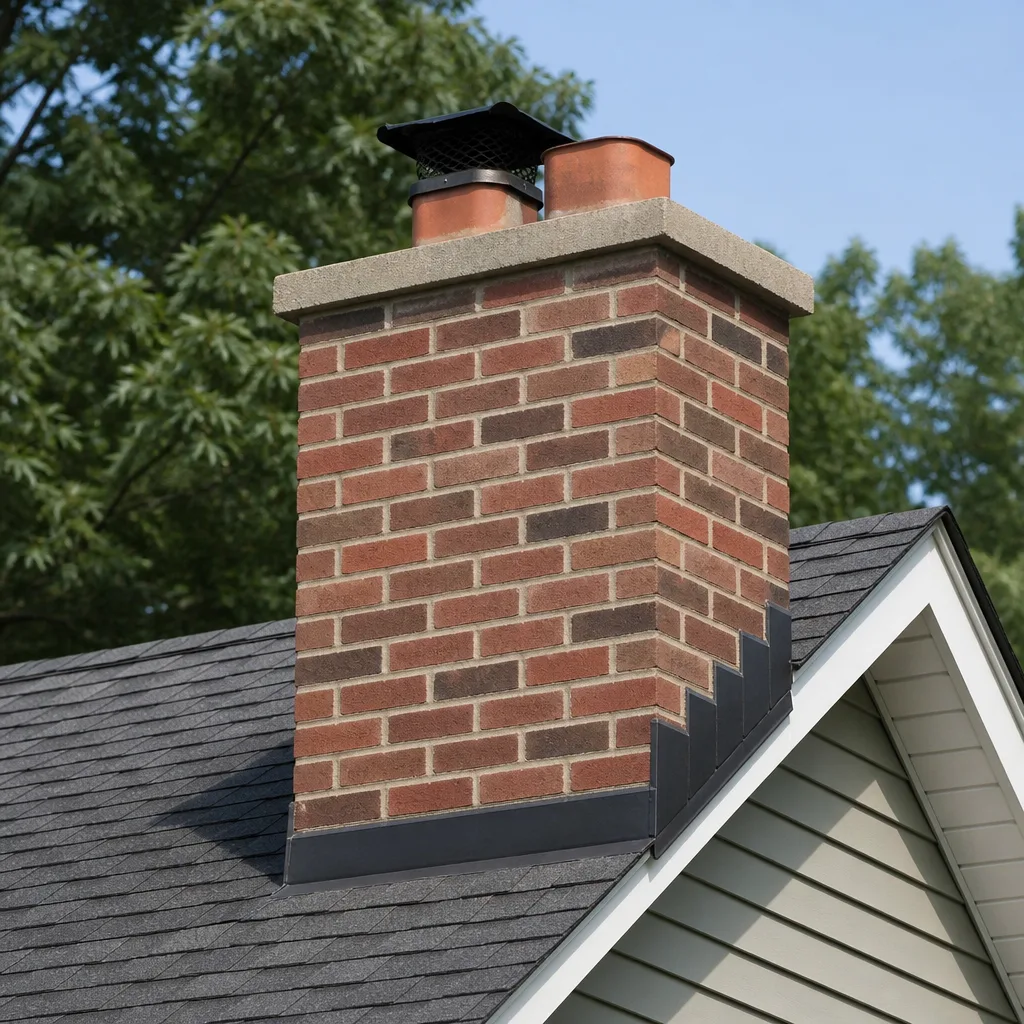 Masonry repair
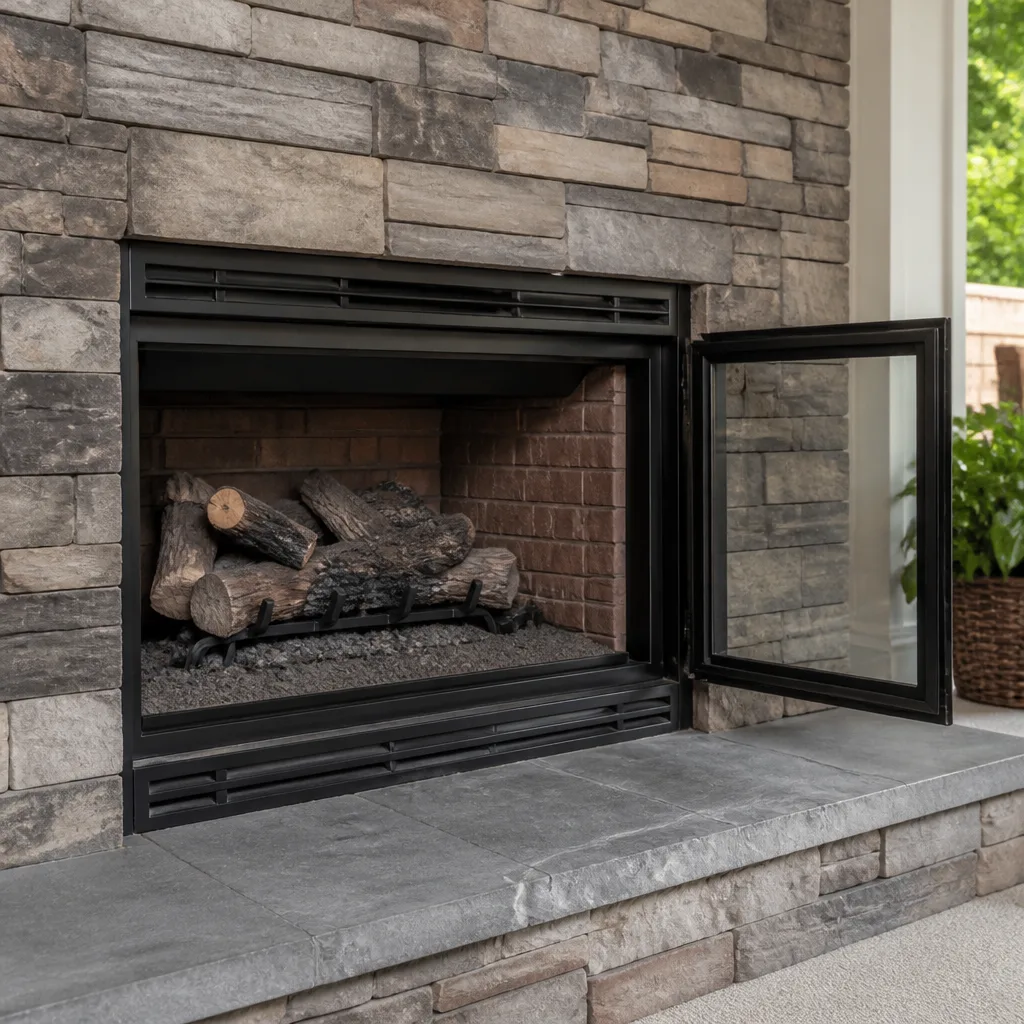 Gas fireplace service
Level 1 sweep and inspection to the NFPA 211 annual standard - flue, crown, cap, and flashing checked and photographed
Chimney sweep logs do not sweep chimneys. They loosen some creosote - which then falls where a brush and vacuum still have to collect it.
The Complete Chimney Sweep Guide for Redondo Beach Homeowners
Most Redondo Beach homeowners use their fireplace fewer than 15 nights a year. That infrequent use feels like a reason to skip our Chimney Sweep services, but the opposite is true. A low-use fireplace in a salt-air climate develops problems that a wood stove burning daily in Minnesota never sees. This guide explains what actually happens inside a coastal South Bay chimney, why the standard sweep advice doesn’t fit Redondo Beach, and how to know when your flue needs attention before a small issue becomes a liner replacement.
Quick Answer
A chimney sweep in Redondo Beach typically costs between $189 and $350 for a standard inspection and cleaning, and most homes with a wood-burning fireplace should schedule The Complete Guide to Chimney Cleaning in Redondo Beach every 1 to 2 years, even with light use. The coastal marine layer and salt air corrode mortar and metal components faster than inland climates, which means visual inspections matter as much as cleaning. The right sweep for this area checks for salt-driven mortar erosion, stage 1 glazed creosote, and rust on the damper assembly, not just soot buildup.
Styles & brands we work with
- Sweep & inspection
- Caps & crowns
- Flue relining
- Masonry repair
- Gas fireplace service
Table of Contents
- Why Coastal Air Changes Everything About Chimney Maintenance
- What a Chimney Sweep Actually Includes: Step by Step
- How Often Should You Sweep a Redondo Beach Chimney?
- The Two Creosote Profiles: What Low-Use Fires Leave Behind
- Sweep-Only vs. Full-Lifecycle Inspection: What Gets Missed
- Liner Restoration Without a Rebuild: HeatShield and What It Means
- Why Your Dryer Vent Belongs in the Same Conversation
- Local Code and Permits: What Redondo Beach Requires
- What Does a Chimney Sweep Cost in Redondo Beach?
Why Coastal Air Changes Everything About Chimney Maintenance
Salt air is the variable most chimney guides ignore. Even three blocks from the Esplanade, the marine layer pushes fine salt particles into mortar joints throughout the year. Those particles absorb moisture from the fog, and that moisture sits against the brick and mortar far longer than a rainy climate’s water would, because it never fully dries. The result is accelerated spalling, the flaking and crumbling of brick faces, along with faster mortar joint erosion than you’d see in Torrance or Gardena just a few miles inland.
We’ve opened flues in Redondo Beach homes where the firebox itself looked fine but the mortar above the roofline had softened to the consistency of wet sand. The homeowner had burned maybe ten fires total the previous winter. The damage wasn’t from heat. It was from salt and fog doing their work across years of mild neglect.
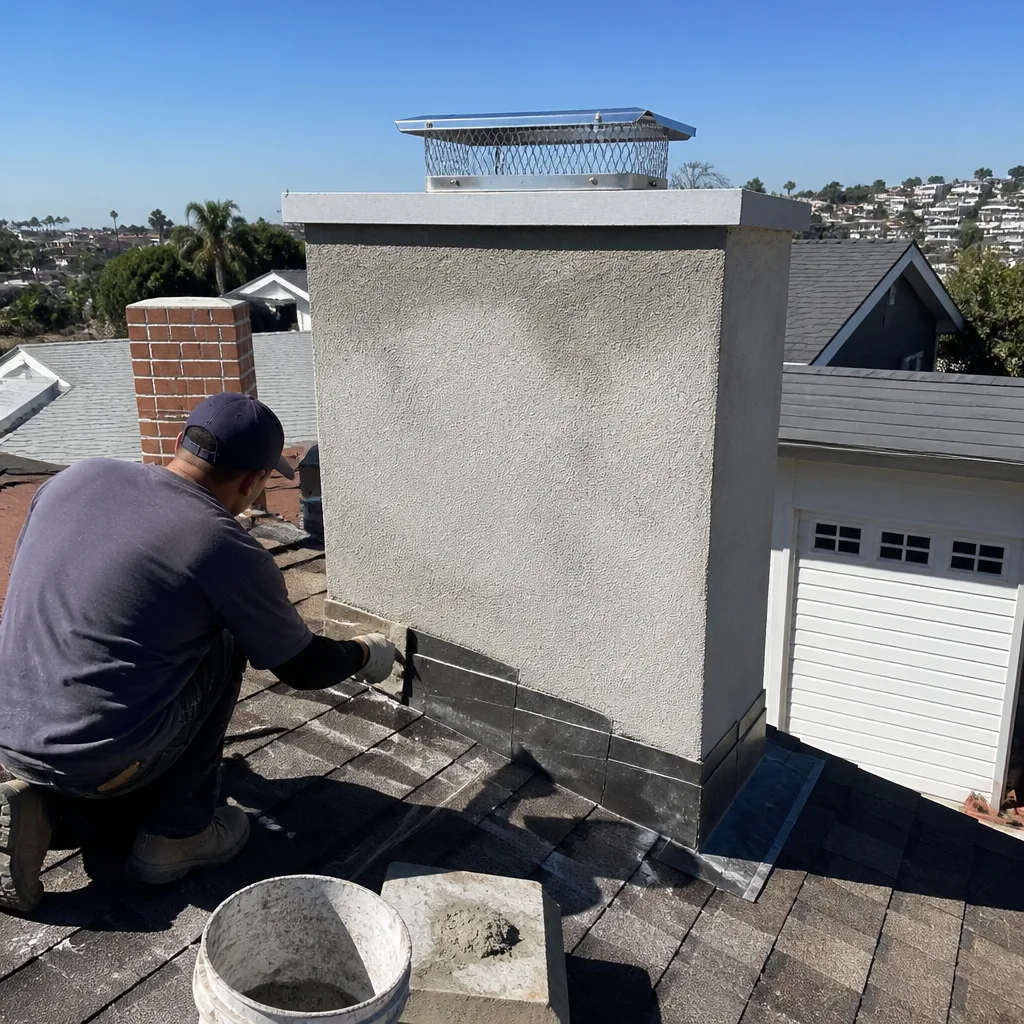
Inspection points specific to this environment include the crown, the concrete slab that caps the chimney, where hairline cracks let fog moisture seep into the brick below. Also the flashing where the chimney meets the roof, since the same marine air corrodes galvanized flashing faster here than in drier zones. And the damper assembly, because a cast-iron damper in a Redondo Beach flue rusts top-down, not bottom-up, due to condensation that forms when warm indoor air meets the cool, damp flue walls overnight.
A competent chimney sweep in Redondo Beach should inspect all three every visit, regardless of whether you asked for a cleaning or not. These are the failure points this climate produces first.
What a Chimney Sweep Actually Includes: Step by Step
A real sweep is a process, not a brush pushed up a flue. Here is what a full service should cover, in order:
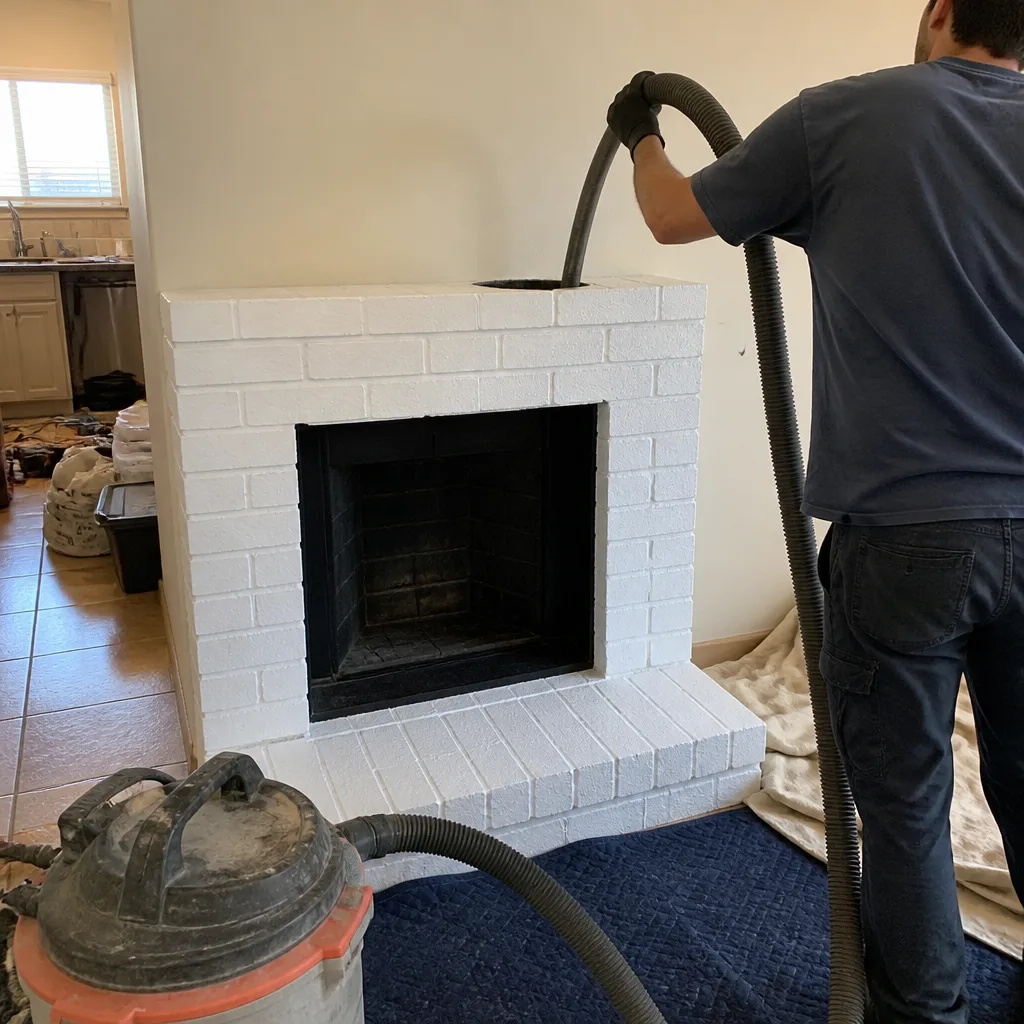
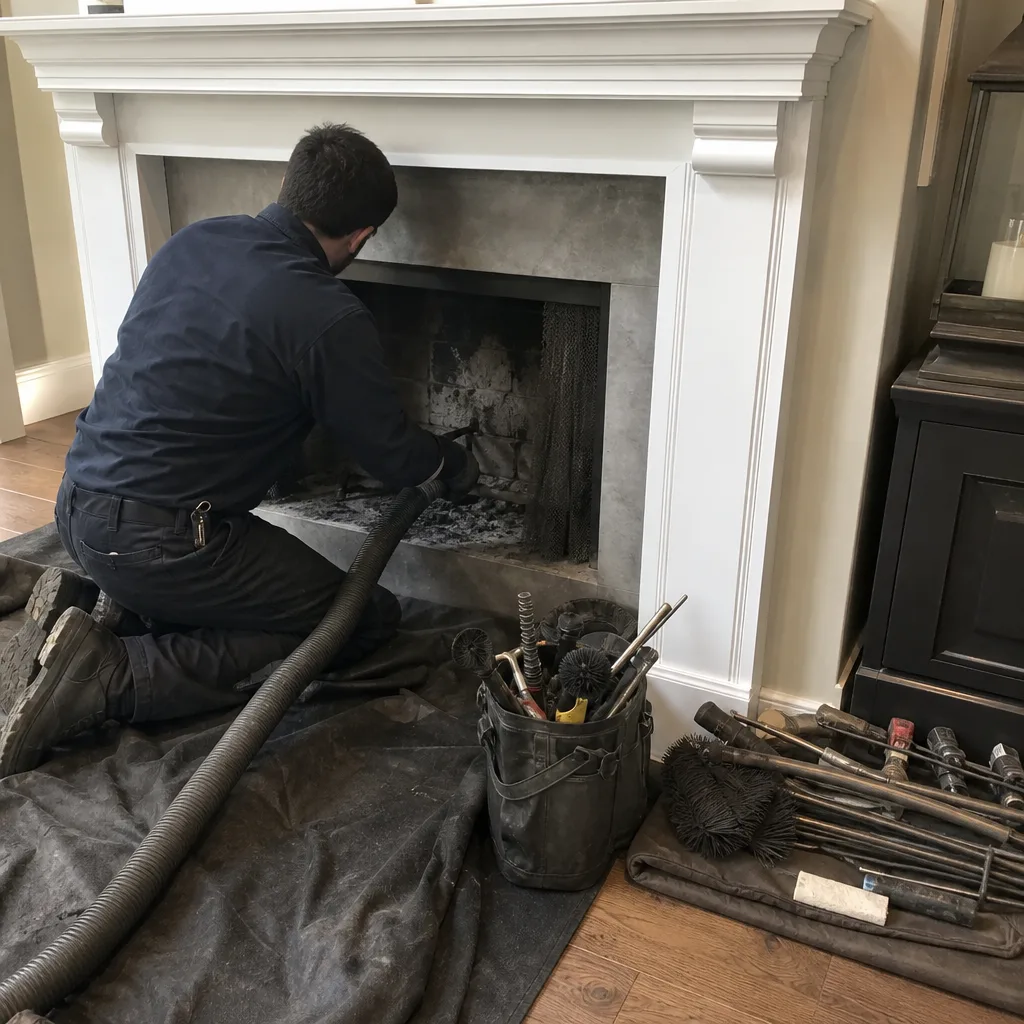
- Interior protection. The technician lays drop cloths from the entry door to the fireplace and seals the firebox opening with a high-suction vacuum running before any brushing begins. If a company skips this, dust migrates through the whole house.
- Visual inspection of the firebox and damper. Looking for cracked refractory panels, rust on the damper plate, and signs of water intrusion at the smoke shelf.
- Flue brushing. The brush size matches the flue diameter, not whatever is on the truck. A liner that has shifted or a flue with offset angles requires different tools than a straight terracotta run.
- Smoke chamber and smoke shelf cleaning. This is the most commonly skipped step in sweep-only services. Soot accumulates heavily in the angled transition above the damper.
- Cap and crown inspection from the roof. This is where salt-air damage shows first in Redondo Beach. The crown gets checked for cracks, the cap for rust, and the spark arrestor mesh for corrosion or blockage.
- Final vacuum and report. A thorough sweep leaves the firebox cleaner than arrival. The report should include photos of anything concerning, especially if liner work is recommended.
For a deeper look at how to choose the right service, see our guide to Chimney Sweep Redondo Beach home standards and what separates a maintenance clean from a genuine safety inspection.
How Often Should You Sweep a Redondo Beach Chimney?
The answer depends on your burn rate, not the calendar. Here is the breakdown we use when advising homeowners in Redondo Beach:
- Wood fires, 10 to 20 nights per season: sweep every 2 years. But have a visual inspection every year, because the coastal moisture is doing damage independent of how much you burn.
- Wood fires, more than 2 nights per week during winter: sweep annually. At this burn rate, creosote accumulates fast enough that a 2-year interval becomes a fire risk.
- Rarely use the fireplace, fewer than 5 fires per year: sweep every 3 years, but do not skip the annual roof check. The crown, cap, and flashing degrade on the ocean’s schedule, not yours.
- Gas fireplace only: a sweep is not needed, but the venting system and the gas log set should be inspected every 2 years. Soot from gas logs is minimal, but carbon monoxide venting problems are not.
- You just bought the home: sweep and inspect before the first fire. You have no data on how the previous owner used the fireplace or what condition the flue is in.
Coastal Redondo Beach’s defining factor is moisture. The marine layer doesn’t care if you burn wood or not. Your mortar, your crown, and your damper are exposed to salt fog 365 days a year. A low-use fireplace still needs its structural components checked annually, even when a cleaning can wait.
The Two Creosote Profiles: What Low-Use Fires Leave Behind
Creosote is not one substance. It forms differently depending on fire temperature, and a Redondo Beach homeowner who burns a short evening fire a handful of times per season produces a different creosote profile than someone running a stove hot in a Montana winter.
Stage 1 creosote is the primary type we find in low-use coastal fireplaces. It’s a fine, dusty, flaky residue, mostly soot with a light coating of condensed tar. It brushes off easily. But stage 1 in a damp flue has a specific problem: it absorbs moisture from the marine air and becomes slightly gummy. That gumminess holds salt particles against the flue wall, and over repeated cycles the residue gets sticky enough to grab more soot the next time you burn.
Stage 3 creosote is the dense, porous, tar-like glaze most often associated with high-heat, high-use stoves. It’s hard to remove and extremely flammable. Low-use Redondo Beach fireplaces rarely hit stage 3 unless the homeowner burns unseasoned wood or closes the damper too early after a fire, starving the smoke of oxygen while it’s still hot.
The practical distinction: a standard brush sweep handles stage 1 easily. Stage 2 or 3 requires rotary cleaning tools and chemical treatments, which changes both the time and the cost. When we inspect a coastal low-use chimney, we’re checking for that moisture-activated gummy stage 1 and watching for isolated stage 2 pockets, usually right at the smoke shelf where condensation pools. Knowing the profile determines whether a standard cleaning is safe or whether the flue needs mechanical rotary work.
For homes that have progressed beyond what a brush can reach, our chimney repair in Redondo Beach service addresses creosote damage and flue restoration at the structural level.
Sweep-Only vs. Full-Lifecycle Inspection: What Gets Missed
Most chimney companies in the South Bay sell a sweep and call it done. The broom goes up, the dust comes down, the invoice gets paid. The parts of the system that actually fail in Redondo Beach are the parts a brush never touches.
A full-lifecycle visit means the technician is qualified and equipped to inspect, clean, and repair the entire flue system from firebox to cap, plus diagnose the adjacent venting systems in the home. Here is what surfaces only when a company handles the full lifecycle:
- Liner cracks hidden behind glaze. A terracotta liner can crack from repeated thermal cycling, and the crack sits behind a layer of creosote glaze. A sweep-only tech notes the creosote. A repair-competent tech recognizes the hairline shadow that indicates a cracked tile beneath.
- Mortar joint failure at the flash point. The joint where the flue liner narrows or changes direction is a common salt-moisture failure point. Detection requires knowing what to look for, not just pushing a brush through.
- Damper seat warping from rust. A damper that’s seized open is an energy leak and a moisture entry point. A sweep-only service might lubricate it. A full-service team can replace the damper plate or recommend converting to a top-sealing damper.
- Dryer vent obstruction at the wall cap. Lint builds up at the exterior termination where the flap is, not just in the duct run. If the technician never checks the wall cap, the vent is never actually clean. We address this as part of our dryer vent cleaning in Redondo Beach service, and it’s a common source of hidden lint fires.
The difference matters in dollars. Catching a liner crack early sometimes means a targeted HeatShield resurfacing instead of a full reline. Catching a crown crack means a $300 crown seal instead of a $3,000 flue rebuild five years later. The sweep is the entry point. The lifecycle assessment is where the actual protection happens.
Liner Restoration Without a Rebuild: HeatShield and What It Means
A cracked flue liner used to mean one option: break out the old clay tiles and install a new liner, usually a DuraFlex stainless steel system. That’s a significant job. HeatShield changed the equation.
HeatShield is a ceramic refractory coating applied inside the existing flue. It fills cracks, restores the smooth surface of the liner wall, and creates a continuous protective layer that can extend the life of a damaged clay liner for years. It’s not a patch. It’s a restoration system that bonds to the flue and creates a new interior surface.
We use HeatShield because it solves the exact problem coastal Redondo Beach homes develop: hairline cracking from thermal cycling combined with moisture intrusion. A straightforward ceramic crack, caught before it widens or allows flue gases into the chimney chase, is a strong candidate for HeatShield. The alternative is far more invasive and far more expensive.
The boundary is structural. If the flue has shifted, if tiles have separated so the flue is no longer continuous, or if the damage extends into the smoke chamber in a way that destabilizes the chimney, HeatShield is not appropriate. A trained technician, after a camera inspection, can tell you plainly whether restoration is viable or whether a full reline with a DuraFlex liner is the honest recommendation. Nothing gets recommended without camera evidence you can see for yourself.
Why Your Dryer Vent Belongs in the Same Conversation
Dryer vent fires are one of the leading causes of household fires in Southern California, and the marine air makes them worse. Moisture from the fog keeps lint damp inside the vent run, and damp lint clings to the duct walls instead of blowing through. Over time the vent narrows, the dryer runs hotter, and the lint bakes into a hard, flammable lining.
A single-contractor arrangement for chimney and dryer vent means one technician walks your home with the same diagnostic eye for both systems. When we clean a dryer vent, we use Famco components at the termination point because the wall cap and damper assembly are where Redondo Beach vents fail first. The sea air rusts cheap aluminum caps and the flap stops sealing, which lets in moisture, which accelerates lint compaction. A Famco cap with a proper backdraft damper changes that.
The pairing is practical: both systems handle hot exhaust, both dead-end at the roof or exterior wall, and both are invisible neglect points until they cause a problem. One inspection a year catches both.
Local Code and Permits: What Redondo Beach Requires
Redondo Beach follows the California Building Code with local amendments, and the permit line for chimney work is fairly clear. A cleaning, a standard inspection, crown sealing, and minor cap replacement do not require a city permit. These are maintenance actions, not structural changes.
Permits are required when the work is structural: a full chimney rebuild, major masonry demolition, or relining that changes the flue dimensions. HeatShield restoration typically does not require a permit because it’s an interior resurfacing within the existing flue, not a dimensional change. A full DuraFlex reline often does require sign-off because the flue diameter changes and the installation is a permanent structural modification.
If you’re unsure, a qualified contractor should be able to tell you plainly, in writing, whether the proposed repair falls under maintenance or permitted work. That clarity is part of the service, not an add-on. The city’s Building and Safety Division is the authority, but your contractor should know the code before they quote the job.
What Does a Chimney Sweep Cost in Redondo Beach?
Here are the ranges we currently see across the South Bay. These reflect coastal market pricing in Redondo Beach and nearby neighborhoods:
| Service | Typical Range | What It Includes |
|---|---|---|
| Standard sweep and inspection | $189 – $280 | Firebox, damper, flue brush, smoke chamber, basic cap check |
| Sweep with full camera inspection | $280 – $350 | Everything in standard, plus video documentation of liner condition |
| Dryer vent cleaning | $89 – $150 | Duct run from dryer to wall cap, cap inspection, airflow verification |
| Crown sealing | $250 – $400 | Crack filling and waterproofing of the chimney crown |
| HeatShield liner restoration | $1,800 – $3,500 | Depends on flue height and number of repairs required |
| Full stainless steel reline (DuraFlex) | $3,500 – $7,000 | Complete liner replacement, permit included |
These are ranges, not quotes. The exact number depends on flue height, access difficulty, current liner condition, and whether your home is a single-story or a two-story structure with a steep roof grade. Redondo Beach’s mix of 1920s Spanish bungalows and 1970s tract homes means flue configurations vary enormously, and the price tracks the configuration. Call (866) 632-1088 for a specific estimate for your home.
Common Mistakes to Avoid
- Skipping the annual inspection because you rarely use the fireplace. The salt air and fog do not care how many fires you burned. Your crown and damper are degrading on the ocean’s schedule, not your burn schedule.
- Hiring a sweep-only company for a home with unknown chimney history. If you’ve never had a camera inspection, you don’t know whether the liner is cracking. A brush clean tells you nothing about structural integrity.
- Burning unseasoned wood from a big-box store bundle. The wood is often too wet, which produces a heavy, sticky stage 1 creosote and increases the frequency of cleaning needed.
- Closing the damper too soon after the fire dies down. Embers can smoke for an hour after the flames are gone. Closing the damper too early traps that smoke and moisture in the flue, accelerating creosote formation.
- Ignoring the dryer vent because it’s “a different system.” It’s the same fire-safety concern and the same salt-air environment. A clogged dryer vent in Redondo Beach can ignite within a season if the lint hardens.
- Assuming a cap that “looks fine” from the ground is fine. Rust at the spark arrestor mesh and the flue connection point is invisible from ground level. A roof-level inspection is the only way to see it.
- Treating HeatShield or a reline recommendation as an upsell without asking for the video. Any legitimate recommendation comes with camera footage. If the technician can’t show you the cracks, get a second opinion.
See the difference
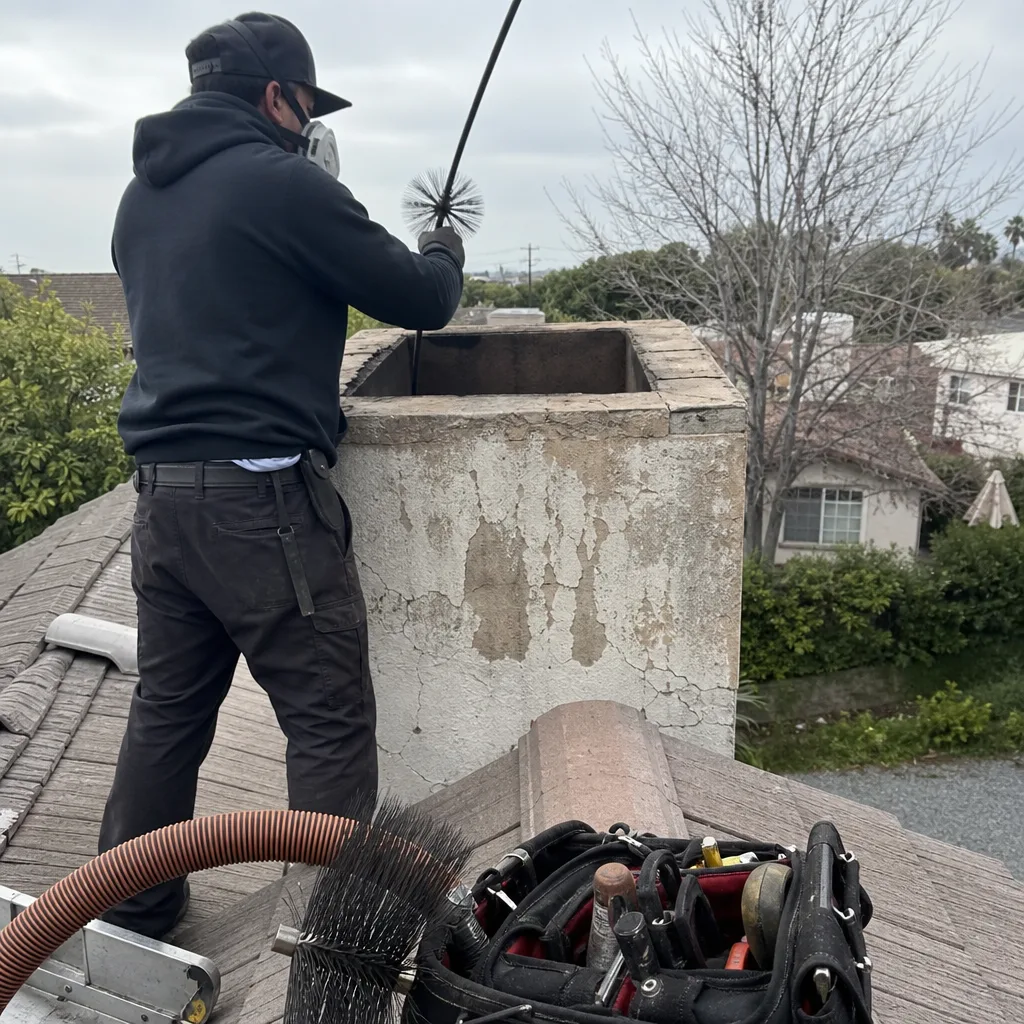 Before
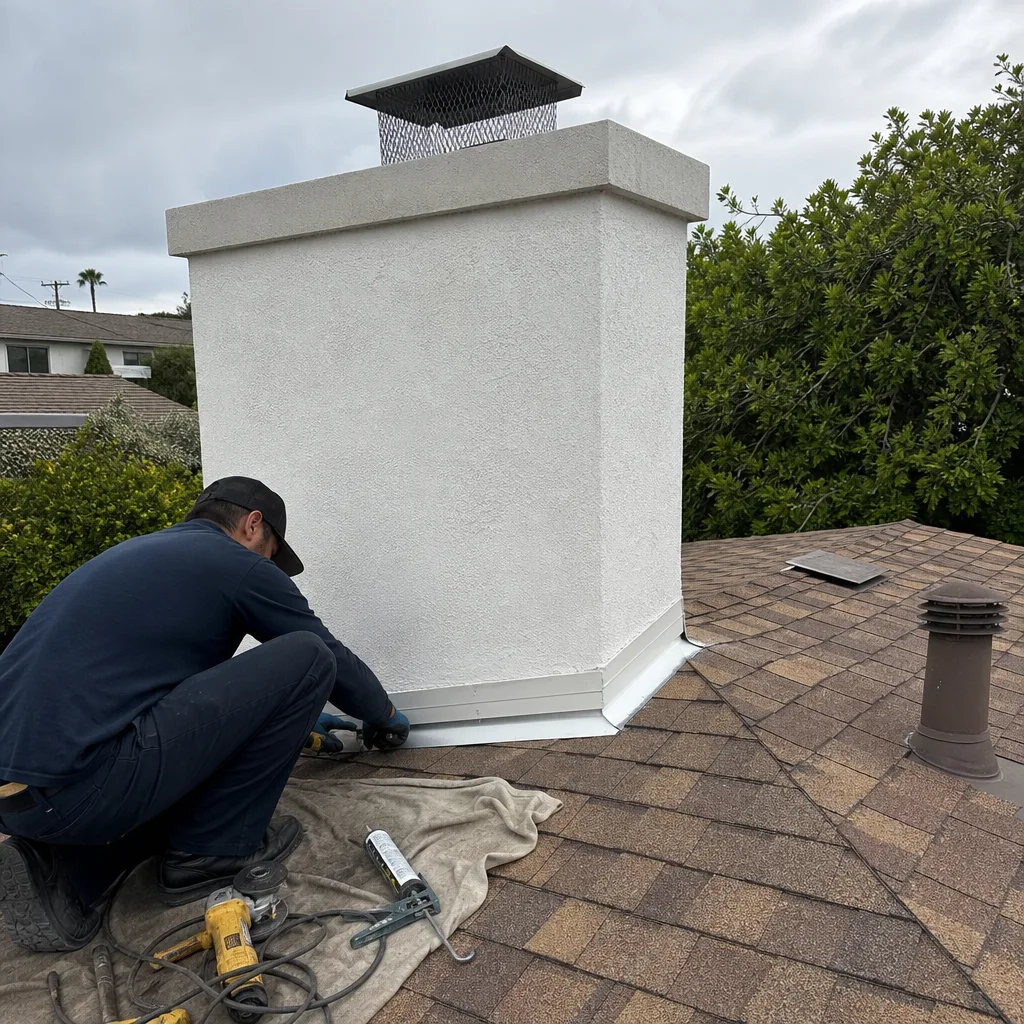 After
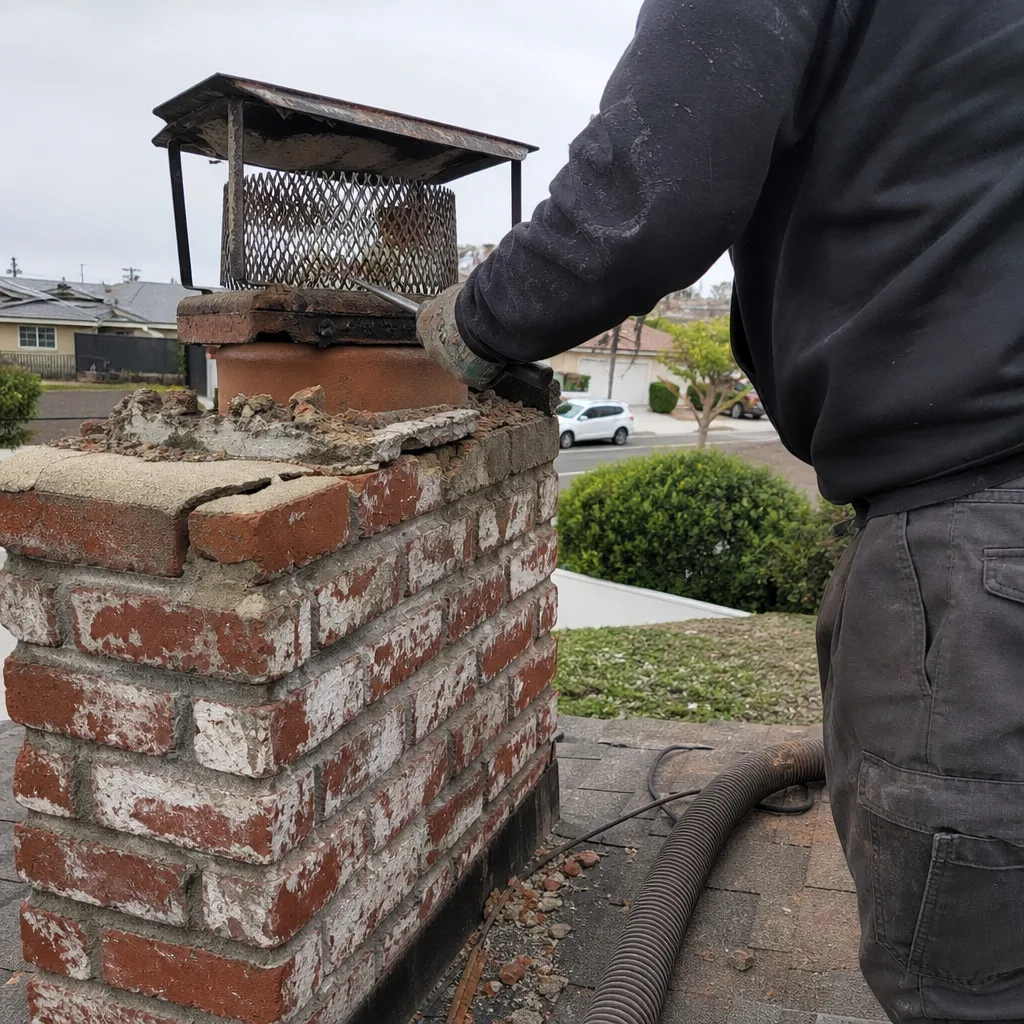 Before
 After
 Before
 After
When to Call a Professional
Call a professional if you see flaking brick or mortar dust on the hearth, if you smell a campfire odor in the house when the fireplace is not in use, if the damper is stuck or won’t seal, if you notice a water stain on the ceiling near the chimney, or if your dryer has been taking longer than 45 minutes to dry a normal load. These are not wear-and-tear quirks. They are signals that the exhaust system is failing. Chimney Sweep Redondo Beach offers free estimates in Redondo Beach. Call (866) 632-1088 and describe what you’re seeing. We’ll tell you plainly whether you need a visit or can wait.
Frequently Asked Questions
A standard chimney sweep in Redondo Beach typically costs between $189 and $280, with a full camera inspection running $280 to $350. The exact price depends on flue height, roof access, and the condition of the liner. Call (866) 632-1088 for a free estimate specific to your home.
Yes, but the reason is not the fire. The marine layer and salt air in Redondo Beach corrode masonry and metal components year-round, so an annual visual inspection is warranted even when a full cleaning can wait two or three years. Low-use fireplaces are also more prone to moisture-activated creosote buildup, which a brush sweep addresses before it becomes stubborn.
Every 2 years for a wood-burning fireplace used 10 to 20 nights per season, annually if you burn more than two nights per week, and every 3 years for very light use. Gas fireplaces should have their venting checked every 2 years regardless. The annual roof check for crown and cap damage is separate and should happen every year in this climate.
HeatShield is a ceramic refractory coating applied inside the existing flue to fill cracks and restore the liner surface. It’s a legitimate restoration method for hairline cracks caught before they widen or the flue shifts. A full stainless reline with DuraFlex is necessary when the structural integrity of the flue is compromised beyond what a resurfacing can address.
No permit is required for a standard sweep, inspection, crown sealing, or cap replacement. A permit is required for structural work like a full rebuild or a reline that changes flue dimensions. HeatShield restoration typically falls under maintenance because it’s an interior resurfacing within the existing flue, but your contractor should confirm in writing before starting.
Both systems carry hot exhaust out of the home, both accumulate flammable material, and both degrade faster in the salt air of Redondo Beach. A single contractor can inspect both in one visit, which means the dryer vent gets the same diagnostic attention as the chimney, not a brush-through that misses the wall cap where coastal homes fail first. Call (866) 632-1088 to book both in one appointment.
The Bottom Line
Redondo Beach chimneys fail from moisture and salt, not from heavy use. The low-use fireplace is the one that hides damage longest because soot never builds up enough to force a cleaning, and the marine layer keeps working silently on the mortar. The right maintenance schedule here is an annual visual inspection, a sweep every 2 to 3 years depending on burn rate, and a camera inspection any time the home changes hands or the first fire of the season smells wrong. Pair the chimney check with a dryer vent cleaning and you’ve covered the two most common household fire-hazard sources in the South Bay in one visit. Call (866) 632-1088 for a free estimate, and keep this guide bookmarked alongside more guides & resources as your reference.
Written by the team at Chimney Sweep Redondo Beach, serving Redondo Beach since 2017.