
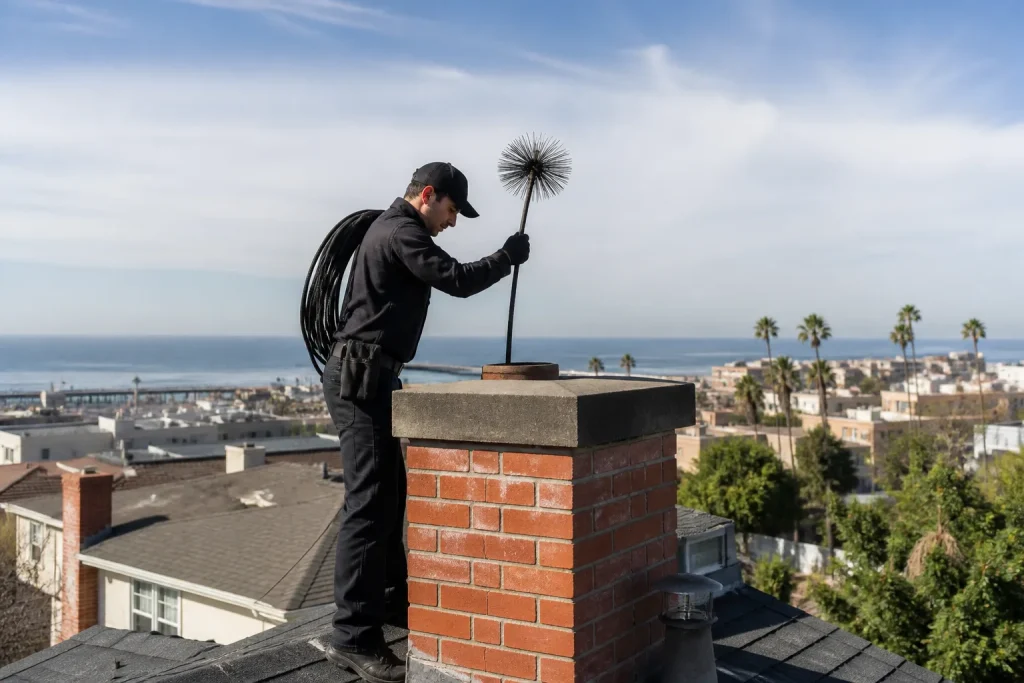
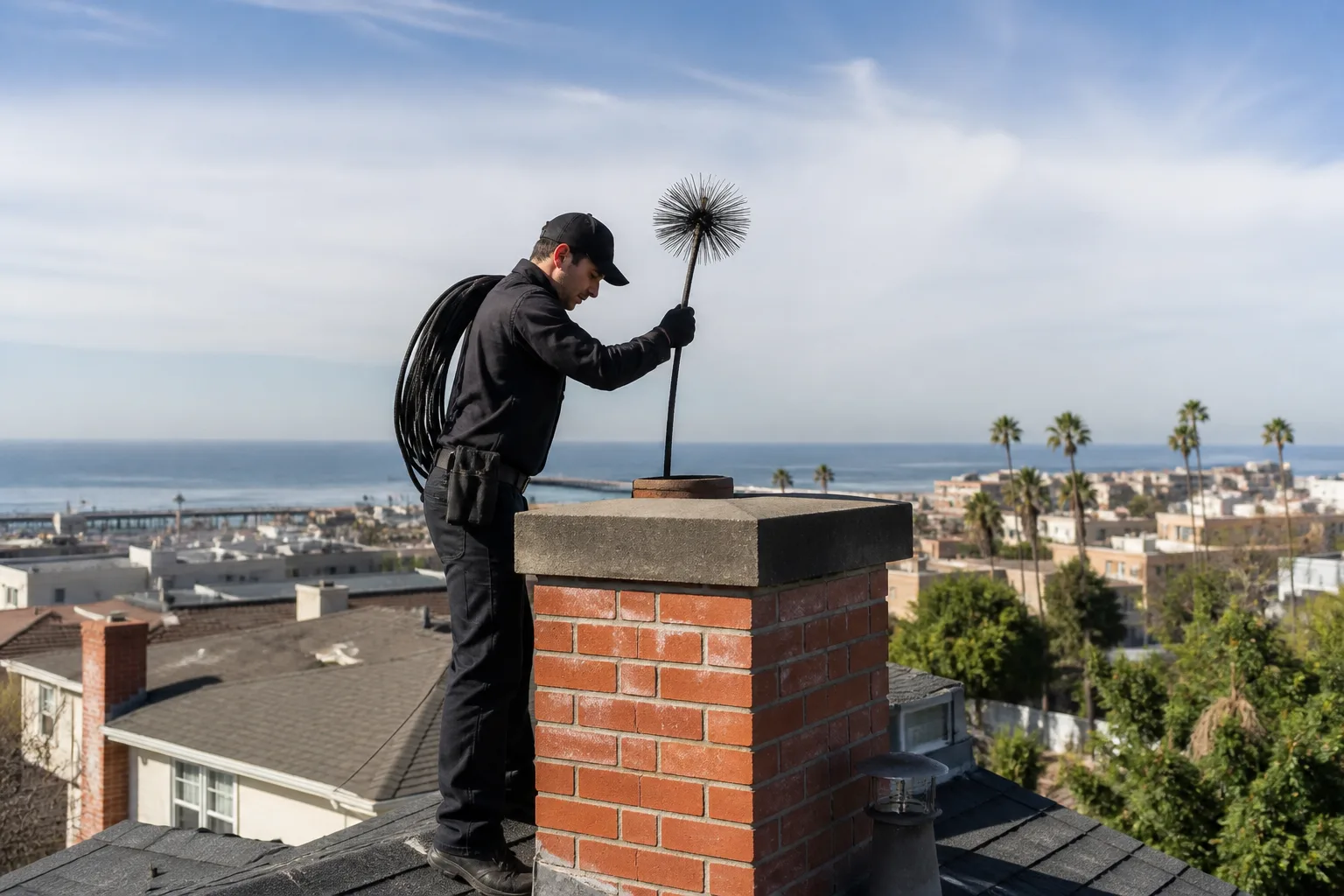
DuraFlex Chimney Sweep in Redondo Beach: A Homeowner’s Guide
If a chimney technician recommends a DuraFlex liner and you’ve never heard the name, you’re not alone. You’re also in the position of approving a $1,500 to $3,000 repair without knowing what separates it from a cheaper alternative. Here’s what actually matters before you say yes.
DuraFlex is a flexible aluminum-alloy chimney liner system used to reline deteriorated flues, and it’s specified in Redondo Beach homes more often than most homeowners realize, especially where older clay tile chimneys have cracked or where gas appliances have been retrofitted into wood-burning fireplaces. If you’d rather skip the research and talk to someone who works with these systems weekly, call our Redondo Beach chimney sweep team at (866) 632-1088.
What DuraFlex Actually Is (And Why It’s Not a “Flex Pipe”)
DuraFlex is a specific product line, not a generic term for any flexible liner. It’s manufactured with a corrugated aluminum-alloy wall that’s designed to flex around offsets and bends in a chimney without kinking or collapsing, and it carries a UL listing that matters for both code compliance and insurance purposes.
In Redondo Beach, where salt air accelerates corrosion on all exterior metal, the distinction between a UL-listed liner and an anonymous substitute isn’t academic. Cheap flex liners can corrode within a few seasons. DuraFlex’s alloy is formulated for continuous flue-gas exposure, and that’s one reason it’s the brand we reach for when a liner recommendation comes up during a chimney sweep in Redondo Beach that reveals clay tile damage.
The key specification to know: DuraFlex liners are tested to UL 1777 for zero-clearance installation in masonry chimneys, and the aluminum construction is approved for gas appliances. That’s not true of every flex product on a supply-house shelf. If a contractor says “flex liner” without naming the brand, ask which one. If they can’t name it, that’s your answer about what’s going into your flue.
When DuraFlex Is the Right Call for a Redondo Beach Chimney
Not every chimney needs a liner. But three conditions come up regularly in Redondo Beach homes built between the 1940s and 1980s, and all three point toward a DuraFlex spec rather than a patch job or a rigid stainless rebuild.
First, offset flues. Older masonry chimneys in South Redondo and the Golden Hills were often built with slight bends in the flue path. Rigid stainless liners can’t make the turn without cutting the masonry. DuraFlex is designed to flex through offsets while maintaining its cross-sectional shape, which means you get a continuous liner from appliance to cap without opening walls.
Second, non-standard clay tile damage. Clay flue liners crack from decades of heating and cooling cycles, and in a coastal climate the moisture intrusion makes it worse. If we scope a chimney with a camera and find a hairline crack running through two or three tiles, relining with DuraFlex restores a continuous, sealed flue path. You’re not just covering the crack; you’re giving the chimney a new interior wall.
Third, gas-conversion retrofits. When a homeowner swaps a wood-burning fireplace for a gas insert or gas logs, the old clay-tile flue is usually oversized for the appliance. That leads to condensation, which becomes acidic, which eats the mortar joints. A correctly sized DuraFlex liner matches the new appliance’s BTU output and venting requirements, which is why it’s the standard recommendation for gas retrofits we handle through chimney repair in Redondo Beach.
What a Proper DuraFlex Installation Looks Like
This is where the details separate a certified install from a loose brand mention. We’ve watched enough installations go sideways to tell you exactly what should happen when a DuraFlex liner goes into a Redondo Beach chimney.
- Sizing to the appliance, not the hole. The liner diameter is matched to the appliance’s BTU input and venting tables, not just whatever diameter fits down the existing flue. An oversized liner condenses; an undersized one starves the appliance for draft.
- The insulation wrap decision. For masonry chimneys in Redondo Beach, where nighttime coastal air keeps flue walls cool, an insulation wrap around the liner keeps flue gases hot enough to rise. That’s the difference between a chimney that drafts and one that dumps condensation back into the firebox. Ask whether your install includes it.
- Top and bottom termination. The liner connects to a proper top plate and rain cap at the crown, and to a connector assembly at the appliance. Loose or improvised terminations are the first place a liner installation fails. We use Gelco caps with our DuraFlex liner work because they fit the system and stand up to salt air.
- Post-installation draft test. After the liner is in, the technician should verify draft with a smoke test or manometer reading, not just eyeball it. If the draft is weak, the liner sizing or termination is wrong, and it’s worth fixing before you use the fireplace.
What should you ask any contractor who recommends a DuraFlex liner? “Are you certified to install that product, and what termination components are you using?” A technician who installs DuraFlex correctly will name the top plate, cap, and connector kit without hesitation. A technician who’s using the brand name loosely won’t.
How a DuraFlex Liner Changes Draft and Creosote Behavior
Here’s the part most guides skip: relining doesn’t just fix the structural problem. It changes how the chimney performs going forward.
Older masonry chimneys with damaged clay tiles don’t just leak smoke. They also run cooler, which means creosote condenses faster on the rough, broken flue walls. A correctly sized DuraFlex liner creates a smoother, continuous flue path with a smaller cross-section. The result is hotter, faster-moving flue gases, less creosote accumulation between sweeps, and a chimney that drafts consistently even on cool Redondo Beach evenings when the marine layer sits over the house.
We’ve pulled liners out of homes in the Hollywood Riviera where the original clay tiles were so spalled that the flue looked like a gravel pile. After a DuraFlex reline, those chimneys hold draft better than they did when they were first built. That’s why we describe this work as a system fix, not a patch. The liner is the system.
When to Call a Pro (and When Not To)
If you’re reading this because a technician just recommended a liner, get a camera inspection before you approve anything. A proper chimney and dryer vent company will show you the footage. You should see the crack, the spalled tile, or the offset with your own eyes. We don’t recommend liner work on a chimney we haven’t scoped, and you shouldn’t authorize it on one you haven’t seen.
If you’re curious whether your chimney might need one, a level-2 camera inspection during your next sweep answers it. You don’t need a liner just because your chimney is old. You need one when the flue path is compromised in a way that affects safety or appliance performance.
Related services in Redondo Beach: if the scope shows damage, we can walk you through the repair options. If it doesn’t, you walk away with a clean chimney and a clear bill of health. Either way, you know where you stand.
The Bottom Line
DuraFlex is a UL-listed flexible aluminum liner that solves the three most common problems we see in Redondo Beach chimneys: offset flues, cracked clay tiles, and gas conversions. It’s not the right product for every chimney, but when it is, a proper installation includes appliance-proportional sizing, an insulation wrap decision, correct termination components, and a post-install draft test. If a contractor recommends one, ask to see the camera footage and ask what termination kit they’re using. That question alone tells you whether you’re talking to a certified installer or someone borrowing the brand name.
If you’re in Redondo Beach and need a liner evaluation, Chimney Sweep Redondo Beach offers free estimates. Call (866) 632-1088 and we’ll scope the flue and tell you honestly whether a reline is warranted.
Frequently Asked Questions
A DuraFlex liner installation in Redondo Beach typically runs $1,500 to $3,000 depending on flue length, roof access, and whether an insulation wrap is needed. Shorter single-story runs with easy roof access land at the lower end. Two-story homes with steep pitches or complex terminations push toward the higher end. Gas-appliance liners tend to cost less than wood-burning installations because the liner diameter is smaller. Call (866) 632-1088 for a specific quote based on your chimney’s condition.
DuraFlex aluminum liners are rated for gas appliances, not for wood-burning fireplaces that burn solid fuel. Wood-burning flues require a stainless steel liner system, because the higher flue temperatures can exceed what aluminum is designed to handle. If a contractor recommends DuraFlex for a wood-burning fireplace, that’s a red flag. The correct application is gas inserts, gas logs, and gas furnaces or water heaters venting through a masonry chimney. Call (866) 632-1088 and we’ll verify the right liner spec for your appliance.
A properly installed DuraFlex liner in a Redondo Beach chimney should last 20 to 30 years, with the primary variable being flue-gas condensation rather than the liner material itself. The durability comes from the UL-listed aluminum alloy formulation, which resists the corrosion that eats cheaper flex products within a few seasons. Regular annual sweeps extend liner life by keeping creosote and acidic condensation from sitting against the metal. Most DuraFlex liners outlive the gas appliances they serve.
Not automatically. Many older Redondo Beach homes have clay tile flues that are still doing their job. You need a liner when a camera inspection shows cracked or spalled tiles, when you’ve converted to a gas appliance that’s undersized for the existing flue, or when the flue path has offsets that compromise draft. The only way to know is a level-2 camera inspection. We perform those as a matter of course during chimney sweeps in Redondo Beach, so you’ll see the footage and can decide based on evidence, not a sales pitch. Call (866) 632-1088 to schedule one.
Written by the team at Chimney Sweep Redondo Beach, serving Redondo Beach since 2017.
Need Chimney Cleaning Help?
Call Chimney Sweep Redondo Beach - licensed & insured, here with fast help in Redondo Beach.
(866) 632-1088