
Last updated November 2, 2026
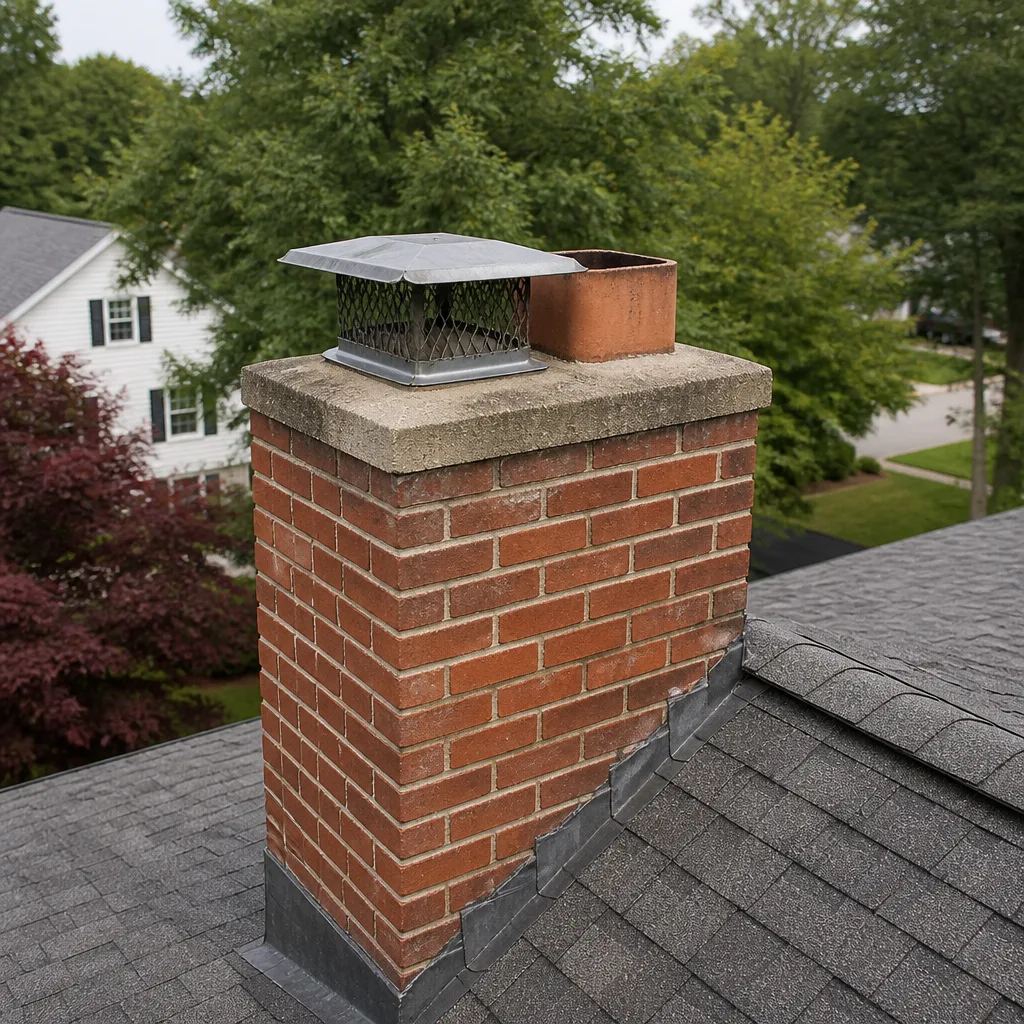 Sweep & inspection
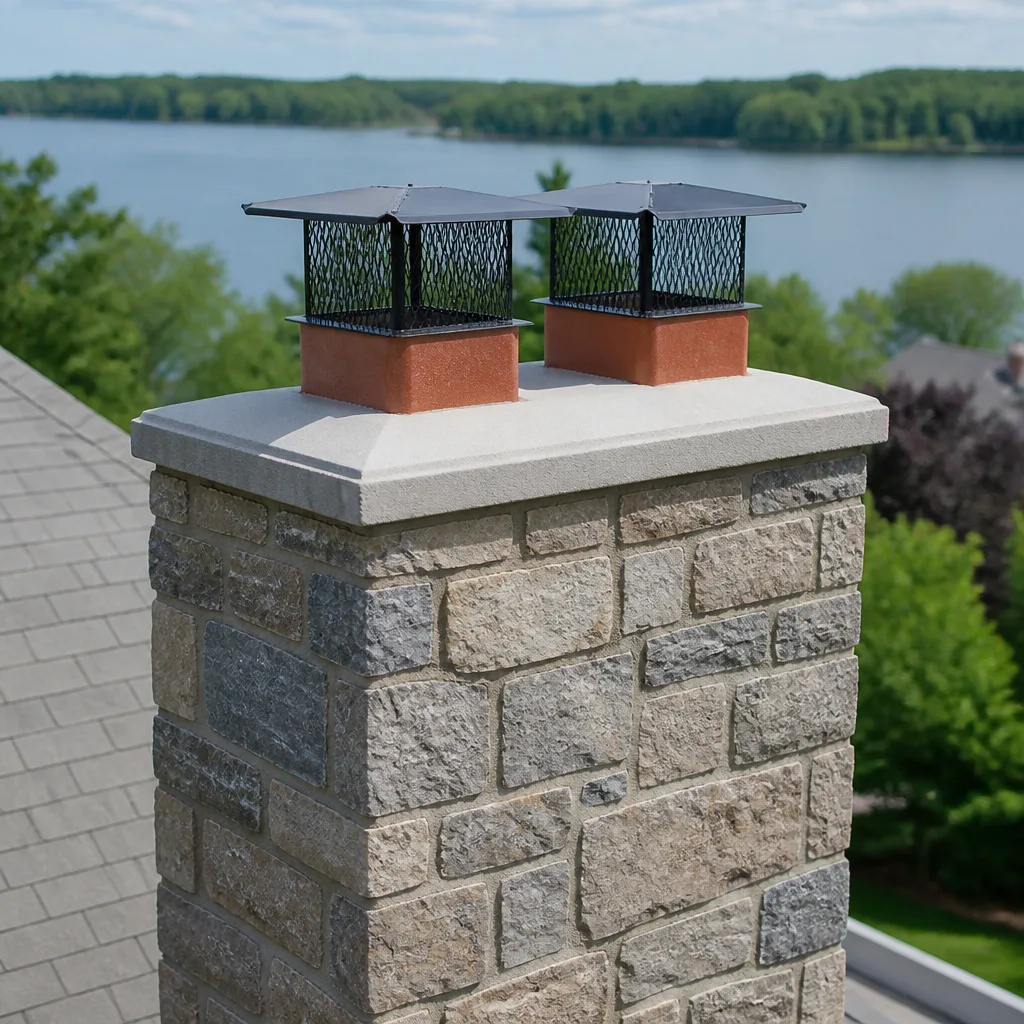 Caps & crowns
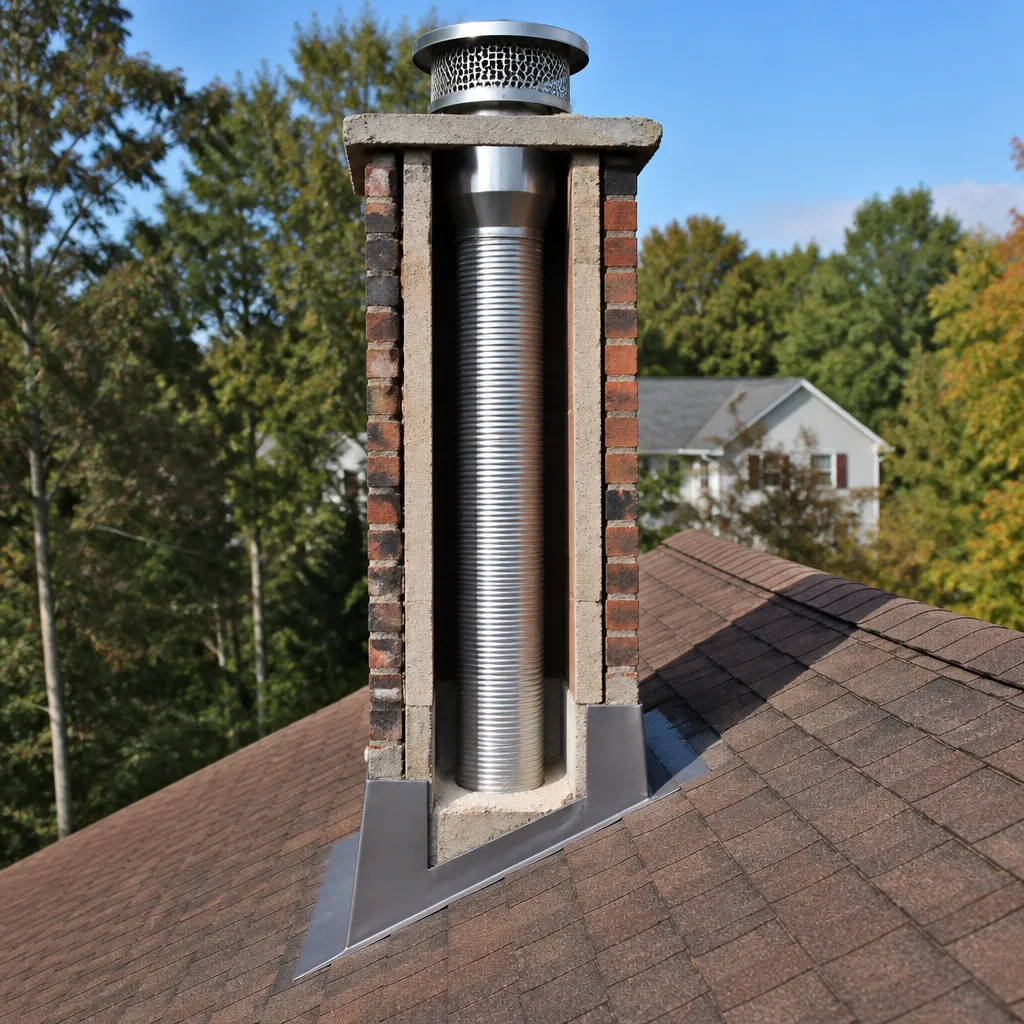 Flue relining
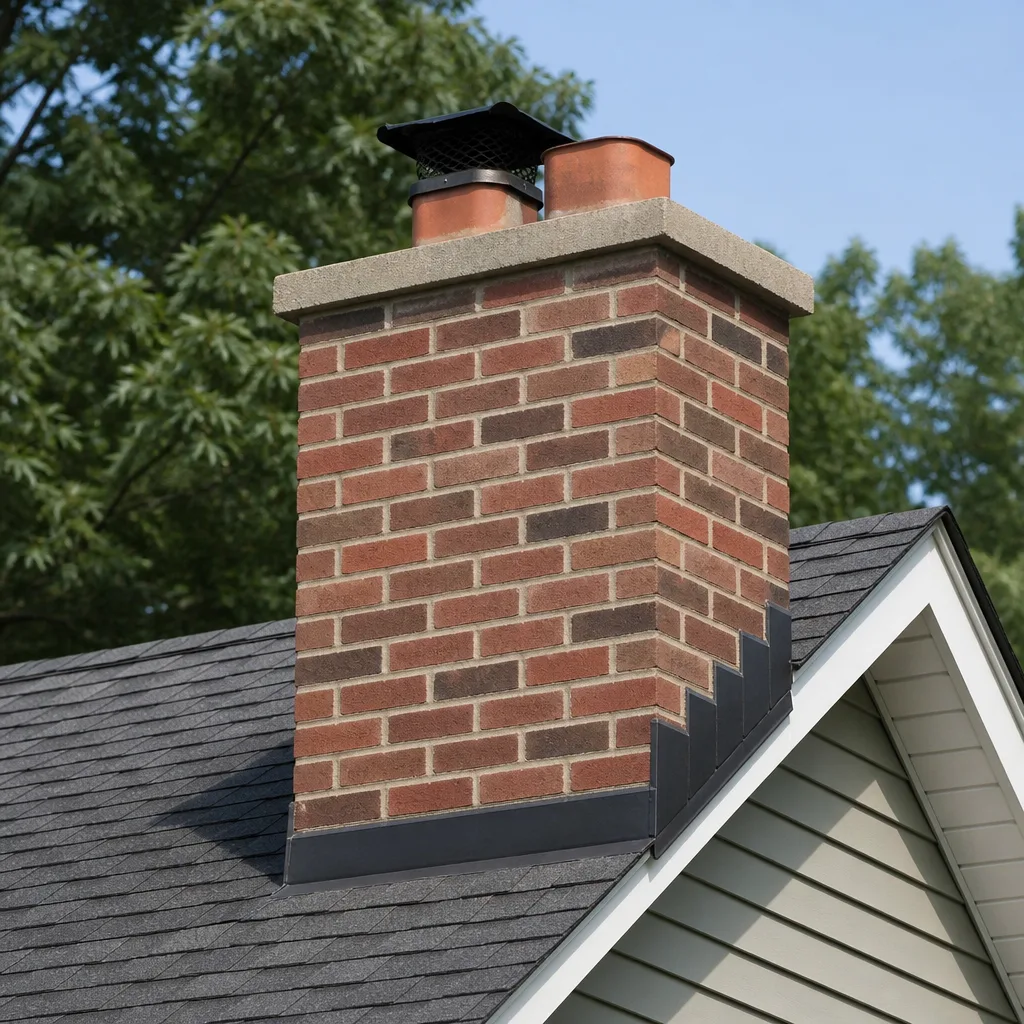 Masonry repair
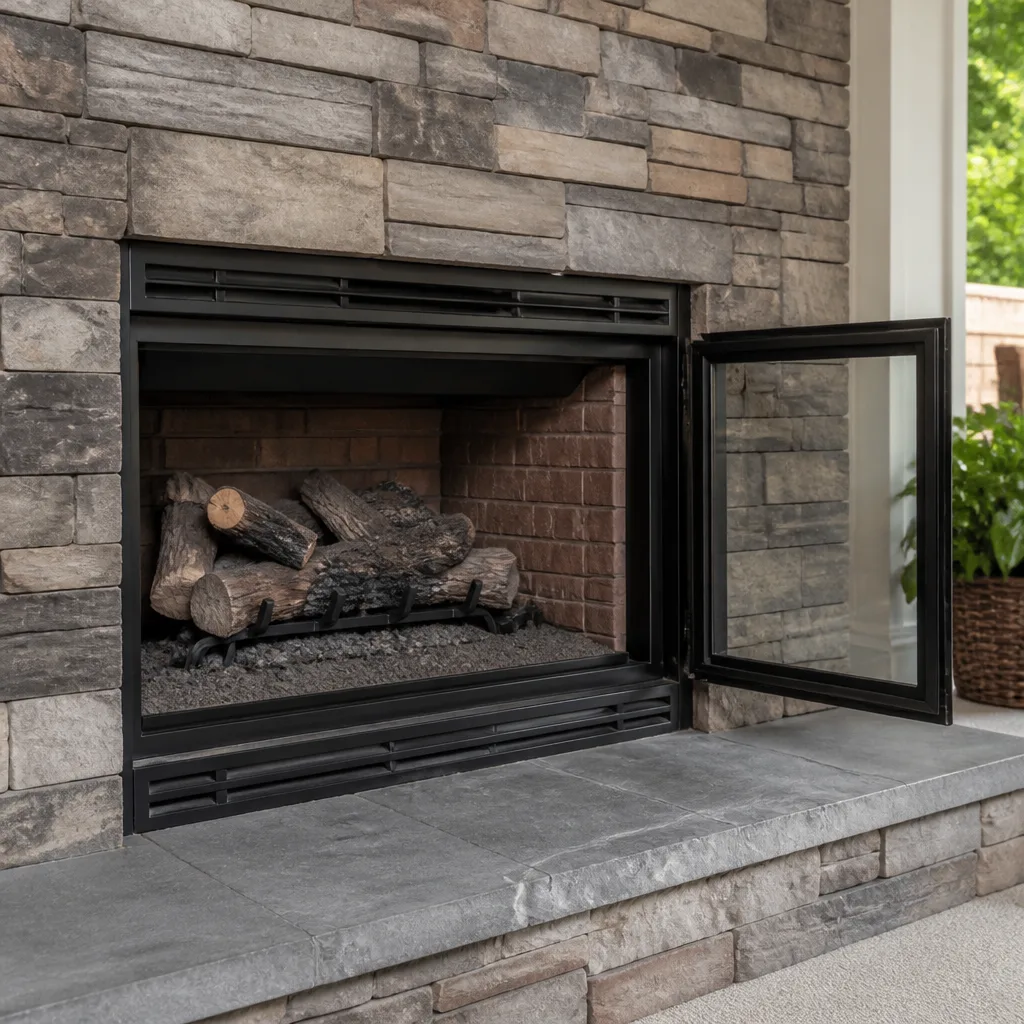 Gas fireplace service
Level 1 sweep and inspection to the NFPA 211 annual standard - flue, crown, cap, and flashing checked and photographed
Chimney sweep logs do not sweep chimneys. They loosen some creosote - which then falls where a brush and vacuum still have to collect it.
Chimney Sweep Maintenance Checklist for Redondo Beach Homeowners
Ask any South Bay chimney technician which component fails first in Redondo Beach, and you’ll get the same answer almost every time: the chimney cap. A missing, rusted, or improperly sized cap lets coastal moisture and wind-driven rain pour straight into the flue. We’ve inspected homes in the Avenues where a failed cap went unnoticed for two seasons and quietly rotted a clay liner to the point of full relining. That’s a $4,000 to $7,000 repair that started as a $150 part. This guide builds a maintenance checklist around what actually fails first in Redondo Beach’s salt-air, mild-winter climate, not the freeze-thaw calendar national guides default to. For Chimney Sweep services tailored to this area, timing matters as much as technique. You’ll learn what to check, when to check it, what a pass and a fail actually looks like, and which items need a professional camera.
Quick Answer
A proper chimney maintenance checklist for Redondo Beach covers six areas: the cap and crown, the flue interior, the damper, the firebox and smoke chamber, the exterior masonry, and the dryer vent system. In Redondo Beach’s coastal climate, the cap, crown, and exterior masonry need attention every 6 to 12 months due to salt-air corrosion, while the flue interior should be professionally camera-inspected once a year. Most items on this list cost under $200 to fix early and between $2,000 and $7,000 to fix if ignored for more than two seasons.
Styles & brands we work with
- Sweep & inspection
- Caps & crowns
- Flue relining
- Masonry repair
- Gas fireplace service
Table of Contents
- Why the Chimney Cap and Crown Fail First in Redondo Beach
- Checking the Flue Interior: What a Camera Sees That You Can’t
- The Damper Test: Pass/Fail Criteria You Can Check Yourself
- Reading Redondo Beach Masonry: Salt, Spalling, and When to Act
- The Dryer Vent Sub-Checklist: Same Neglect Pattern, Same Fire Risk
- Timing the Checklist to Redondo Beach’s Seasons
- Documentation: How to Track Findings Year Over Year
- The Professional Camera Inspection: What to Expect and Ask For
Why the Chimney Cap and Crown Fail First in Redondo Beach
Redondo Beach sits in a marine layer corridor. That means morning fog, salt-laden air, and afternoon sun exposure for chimneys on west-facing slopes in neighborhoods like the Golden Hills and the upper Avenues. The cap and crown take the brunt of that exposure because they sit at the top of the stack with nothing protecting them. A galvanized steel cap in this environment typically lasts 5 to 8 years before pitting and rust-through begins. A stainless steel cap lasts 10 to 15. Most homes in Redondo Beach still have the original galvanized cap the builder installed, which means many are already overdue.
The crown, which is the concrete or mortar slab that seals the top of the chimney around the flue opening, fails differently. Small hairline cracks form from thermal expansion, then salt moisture seeps in and accelerates erosion. Those cracks widen each year until water is entering the chimney chase and migrating into the liner and the surrounding framing.
Pass/Fail Criteria: Chimney Cap
- Pass: Cap sits square on the flue, shows no visible rust, mesh side openings are clear of debris, and the cap surface is intact with no daylight through the top.
- Fail: Rust blooms visible anywhere, mesh pulling away from the frame, cap leaning or partially detached, or any hole large enough to admit a quarter.
- Fail: Cap is missing entirely. We inspect Redondo Beach chimneys monthly where the cap has blown off during a wind event and the homeowner never noticed.
Pass/Fail Criteria: Crown
- Pass: Crown surface is smooth with no cracks wider than a credit card edge, and water beads on it rather than soaking in.
- Fail: Cracks wider than 1/8 inch, visible erosion or pitting, crown surface that appears chalky or sandy when brushed, or any separation between the crown and the flue tile.
- Fail: Standing water on the crown more than a few hours after rain. A crown should shed water, not hold it.
When we replace a cap in Redondo Beach, we install stainless steel rather than galvanized. The cost difference is roughly $150 to $250, but stainless means the part will likely outlast the buyer’s ownership of the home. If a crown has minor cracking, a waterproof sealant rated for coastal exposure can buy a few years. Once cracks exceed 1/4 inch or the crown is actively spalling, it needs to be recast, which means removing and rebuilding the top of the chimney. That’s a job for a chimney repair specialist, not a general handyman.
Checking the Flue Interior: What a Camera Sees That You Can’t
You can check the cap, the crown, the visible exterior, and the damper from the ground or the firebox. What you cannot check without equipment is the inside of the flue, and the inside of the flue is where fires start and where carbon monoxide leaks originate. A cracked clay tile or a deteriorated mortar joint two-thirds of the way up the flue is invisible from both the roof and the firebox. The only way to see it is with a chimney camera inspection.
At Chimney Sweep Redondo Beach home inspections, we run a sealed camera from the firebox to the cap. The footage shows every tile joint, every patch of creosote buildup, every crack, and every obstruction. We review it with the homeowner in real time, which means you see exactly what we see and know exactly why we’re recommending what we’re recommending. No mystery, no upsell.
What the Camera Is Looking For
- Creosote accumulation. In wood-burning fireplaces, creosote builds in three stages. Stage one is a light dusting and is normal. Stage two is a flaky, crunchy deposit that requires mechanical brushing. Stage three is a hard, glazed tar that can ignite and burn at 2,000 degrees inside the flue. A camera shows which stage you have and where it’s concentrated.
- Tile cracks and spalling. A cracked flue tile cannot contain a chimney fire and can also allow hot gases to reach combustible framing. Camera footage shows hairline cracks that are invisible to a standard flashlight inspection from the top.
- Liner separation or collapse. In older Redondo Beach homes, clay tile liners sometimes shift or collapse inward, narrowing the flue and creating a venting restriction. This is a carbon monoxide risk for gas appliance chimneys and a smoke-back risk for fireplaces.
- Moisture entry. Water staining or efflorescence inside the flue means the cap or crown has already been failing for some time. The liner is being actively damaged.
- Nests and blockages. Birds, squirrels, and rats all use Redondo Beach chimneys. The camera finds nest material, carcasses, and debris that a sweep’s brush alone won’t clear.
If the camera reveals tile damage, the repair path in most cases is a HeatShield or DuraFlex stainless steel liner rather than a full chimney rebuild. HeatShield resurfaces the existing flue from the inside, restoring fire resistance and gas-tight integrity without tearing down the chimney. DuraFlex is a flexible stainless steel liner that creates a new, code-compliant flue inside the old one. We recommend whichever matches the chimney’s configuration and the appliance it serves, and we show you the camera evidence that justifies the recommendation before any repair is scheduled. That’s the difference between a Chimney Sweep in Redondo Beach service that diagnoses with evidence and one that quotes on guesswork.
The Damper Test: Pass/Fail Criteria You Can Check Yourself
A working damper is the most frequently overlooked component in a Redondo Beach chimney, and it’s also one of the few you can assess from your living room with no tools. The damper seals the flue when the fireplace is not in use. A failing damper lets conditioned air escape year-round, lets coastal moisture in during fog season, and lets smoke pour into the living room when you light a fire. Here’s how to test it.
Homeowner Test: You Can Do This in 5 Minutes
- Look up into the fireplace with a flashlight. You should see the damper plate in the closed position, seated flat against its frame. If you see daylight around the edges, it’s not sealing.
- Open and close the damper handle or rod. The movement should be smooth with firm resistance. A damper that flops open or closed, or that resists movement and needs force, is misaligned or rusted.
- Feel for airflow when the damper is closed. On a breezy Redondo Beach afternoon, hold a hand inside the firebox with the damper closed. You should feel no moving air. Cold air falling through means the damper is warped, rusted, or no longer seating, and the flue is acting as a chimney for your climate-controlled air.
- Check the cable or chain if your damper is a top-mount style. Redondo Beach homes built after 1990 often have top-sealing dampers controlled by a cable in the firebox. If the cable is frayed or the damper won’t stay closed against the spring, it needs replacement.
If the damper fails any of these tests, a technician can usually replace the damper plate or cable assembly in a single visit. A replacement chimney damper in this market typically runs $200 to $500 installed depending on style. Left alone, a bad damper doesn’t just waste energy; it accelerates the corrosion of any metal components in the flue because the moist ocean air is moving through the chimney constantly.
Reading Redondo Beach Masonry: Salt, Spalling, and When to Act
Masonry chimneys in Redondo Beach face a specific failure pattern driven by salt air and moisture absorption. It’s different from what you see inland. Brick and mortar act like a sponge. Morning fog condenses on the surface, the moisture absorbs into the porous material, the sun dries it, and the dissolved salt stays behind and crystallizes within the pore structure. Those crystals expand, and over years they fracture the surface. The technical term is salt spalling, and it’s the reason so many chimneys in the Riviera and along the Esplanade show flaking brick faces and crumbling mortar joints.
Pass/Fail Criteria: Exterior Masonry
- Pass: Mortar joints are flush and intact, brick or stone faces are smooth with no flaking, and the chimney is plumb with no visible lean.
- Monitor: Hairline cracks in mortar joints, light efflorescence (white, powdery deposits), or minor surface flaking. Not urgent, but worth documenting and re-checking next season.
- Fail: Spalled brick faces (pieces missing or crumbling), missing mortar more than 1/2 inch deep, visible lean, or cracks wide enough to fit a nickel.
- Fail: Damp spots that stay wet on the chimney exterior for days after rain, especially if paired with efflorescence. This means water is moving through the wall, not just sitting on the surface.
Early-stage mortar deterioration is treated with repointing, or tuckpointing, where the old mortar is raked out to a consistent depth and replaced with new mortar matched to the original. In Redondo Beach, the correct mortar mix includes a higher lime content than some inland mixes for flexibility in the damp air, and a good chimney mason will match both the color and the original technique so the repair doesn’t stand out. Repointing typically costs $1,500 to $3,500 for an average Redondo Beach chimney, which is a fraction of the $12,000-plus cost of tearing down and rebuilding a spalled chimney. Catch it at the hairlines.
For chimneys with repeated moisture problems, we recommend a copper or stainless steel rain cover from Copperfield or Gelco. These function differently than a standard cap. A rain cover works with the cap to shield the entire crown from direct rain, which is the leading edge of masonry deterioration here. The brand matters because offshore wind and coastal salt will eat a cheap sheet-metel cover in three years. A Chimney Repair in Redondo Beach specialist can quote the right material for the home’s exposure and roof height.
The Dryer Vent Sub-Checklist: Same Neglect Pattern, Same Fire Risk
Chimney maintenance and dryer vent maintenance get treated as two separate problems in most households. In our Redondo Beach service area, they’re the same problem: a fire-containment passage that slowly fills with combustible material until someone addresses it. A clogged dryer vent ignites from lint fires the same way a dirty chimney ignites from creosote fires. The neglect pattern is identical. The homeowner doesn’t see it, so it doesn’t get scheduled.
Here’s what to check on your dryer vent system in Redondo Beach:
- Dry time. A load of towels should dry in one cycle. If it takes more than one cycle, the vent is restricted. This is the first and most reliable warning sign.
- Lint at the exterior vent hood. Check the flap on the outside wall. If it’s stuck open by lint accumulation, the restriction is significant. A properly clear vent hood will be mostly clean after normal use.
- Laundry room temperature and humidity. A hot, humid laundry room during the dry cycle means the moisture and heated air are backdrafting into the house instead of exiting through the vent. That’s a ventilation failure and a carbon monoxide risk for gas dryers.
- Age of the vent run. Flexible foil or plastic vent tubing is a known fire hazard and no longer meets code in most jurisdictions. Modern vent systems use rigid or semi-rigid galvanized steel or aluminum. If your Redondo Beach home has the old style, replace it.
- Vent length. Dryer vents should be under 25 feet with no more than two 90-degree turns for every bend beyond that, you lose roughly 5 feet of effective run. Long runs common in older beach homes need more frequent cleaning.
We handle Dryer Vent Cleaning in Redondo Beach with the same equipment and standard we use for flue cleaning. We inspect the entire run from the dryer connection to the exterior hood, clean the duct, and verify the vent hood operates properly before we leave. Many systems in older Redondo Beach condominiums and townhomes use multi-story shared vent stacks that are rarely cleaned from the roof side. Running camera inspection through the full vent catches buildup no brush-and-go service will find.
We install replacement vent components from Famco because their hoods and vent covers are built for exposed coastal conditions. A Famco hood has a robust spring-loaded backdraft damper and a grille that resists rust. That matters in Redondo Beach because the vent hood lives on the side of the house and takes daily salt air. The right hood prevents backdrafts, pest entry, and premature rust-through.
Timing the Checklist to Redondo Beach’s Seasons
National guides tell you to inspect your chimney before the first freeze. For Redondo Beach, the calendar should follow the fog, the Santa Ana winds, and the marine layer rather than freezing temperatures. Here’s how we sequence maintenance through the year for this specific climate.
Spring: The Post-Winter Inspection
After winter burns, inspect for creosote accumulation and check the firebox for any new cracks or damaged firebricks. In Redondo Beach, spring is also when birds begin nesting. A cap with a secure mesh screening prevents nests at this exact point in the season, when birds are looking for cavity sites.
Summer: The Fog Season Check
June through August brings the heaviest morning marine layer. This is when moisture intrusion through a cracked crown or a failing cap has the most daily repetitions. Check the crown for new cracks and the firebox for any musty smell. If the flue smells swampy in summer, water is getting in. Address it now, before the wet season.
Fall: The Pre-Burn Preparation
September and October are the busiest months for chimney sweeping in Redondo Beach, and for good reason. The first Santa Ana events remind homeowners that the burn season is coming. But here’s what most people miss: fall is also the ideal time to clean the dryer vent. Lint fires spike during cooler months when dryers run longer and heating systems create larger thermal draws through the home. Do both systems in one call. One contractor handles both, so there’s one scheduling step and one invoice.
Winter: Mid-Season Monitoring
During active burn season, check the firewood you’re burning is seasoned (under 20 percent moisture). Poorly seasoned wood creates creosote three to four times faster than dry wood. Also watch for any smoke rollback when the fireplace first lights. A puff of smoke entering the room on startup can mean a cold flue, but persistent smoke-back means a draft problem, a damper issue, or a restriction.
Documentation: How to Track Findings Year Over Year
The single best thing a Redondo Beach homeowner can do for their chimney’s longevity is document. Most homeowners don’t, which is why slow-moving deterioration surprises so many people. A cracked crown doesn’t fail in a season. It fails across three or four seasons, and if you have photos and notes from each year, you can see the progression and act before the repair bill compounds.
A Simple Documentation Habit
- Take four photos every year: the cap and crown from the roof (or the best ground angle you can get), the masonry from two sides, the firebox with the damper open, and the exterior dryer vent hood. Store them in one folder on your phone labeled “Chimney – Year.”
- Write down what you observe. One line per item is enough. “Small crack on west side of crown, no change from last year.” “Damper holds closed, light pulling on cable.” “Lint buildup on vent hood, cleaned this week.”
- Keep service receipts. Every sweep and inspection report should be filed with your home records. A future buyer will ask about chimney maintenance, and a documented history is a selling point.
- If a technician recommends a repair, ask for the camera footage. A professional chimney company should be willing to show you, on the spot, what the camera found. Save a copy if they can provide one. This protects you from unnecessary work and gives you a baseline for comparing future inspections.
This habit takes maybe fifteen minutes a year, and it changes the dynamic of every service visit. When a technician tells you something needs work, you’re not reliant on their word alone. You have your own record and can see the change. In our experience, documented homeowners make better repair decisions, schedule them earlier when they’re smaller, and spend less money across the life of the home.
The Professional Camera Inspection: What to Expect and Ask For
Once a year, your chimney needs a professional inspection with a camera. This is the standard in our service area now, and it should be the baseline for anyone you hire. Here’s what a proper camera inspection at a Redondo Beach home should include, and what you should expect to walk away with.
What the Inspection Should Cover
- Cap and crown examination. The technician should access the roof and examine both components up close, including checking the mesh openings, the attachment points, and the crown surface for cracks.
- Full flue camera scan. A sealed camera run from the firebox to the cap, recording the condition of every tile joint and the liner surface. If the technician is using a flexible borescope, it should be able to articulate and capture stills.
- Damper operation check. Opening and closing the damper, checking the seating, and lubricating the pivot points if the style allows.
- Smoke chamber inspection. The smoke chamber above the firebox but below the flue is a high-heat zone where creosote hardens and where gaps between chamber bricks are common. A proper inspection assesses this area, which some sweep-only companies skip.
- Firebox assessment. Checking for firebrick cracks, mortar deterioration, and a solid floor. In Redondo Beach, occasional inspection of the ash dump if your fireplace has one.
- Dryer vent scope (if consented). Since we’re already running the camera, many Redondo Beach homeowners have us scope the dryer vent at the same visit. It finds restrictions before they become a fire hazard.
Questions to Ask Before Booking
- “Do you run a camera to the top of the flue on every inspection, or only when you suspect a problem?” The answer should be “every inspection.” Anything else means they’re guessing.
- “Will I see the footage during the visit?” Yes. You should see what they see, in the moment, and have a chance to ask questions.
- “What repair materials do you use if the liner is damaged?” Ask for brand names. If the company can’t name what they’d install, they’re a sweeping service, not a repair resource. Our answer is DuraFlex stainless steel liners or HeatShield resurfacing, chosen based on the specific flue configuration and appliance.
- “Do you handle dryer vents?” If the answer is no, you’re already going to need two companies for your home’s two fire-hazard exhaust systems. One call covers both for us.
Common Mistakes to Avoid
- Assuming no visible smoke means no problem. Creosote buildup and cracked liners don’t announce themselves. The first sign of a problem is often a chimney fire or a carbon monoxide detector. Camera inspection finds issues before either happens.
- Replacing a rusted cap with another cheap galvanized unit. In Redondo Beach’s salt air, galvanized steel caps rust through in five to eight years. Stainless steel lasts twice that long for a modest price difference. Buy stainless once.
- Skipping the dryer vent because “it’s not a chimney.” Lint fires are among the most common residential fire causes, and clogged dryer vents can also backdraft carbon monoxide from gas dryers into the living space. The same camera finds both problems.
- Burning unseasoned wood because it’s free or cheap. The creosote production from wet wood is dramatically higher, and you’ll pay the difference in more frequent sweepings and a higher fire risk. Seasoned wood under 20 percent moisture is non-negotiable.
- Assuming a top-sealing damper is fine because the house “feels fine.” A top damper that’s warped or rusted leaks conditioned air year-round and lets moist coastal air into the chimney. Most homeowners only discover the problem when the energy bill is higher than the neighbors’ or when a musty smell develops in the firebox.
- Putting off a small crown crack because “it’s only a hairline.” In Redondo Beach, hairline cracks in the crown are where salt-water cycles begin. What is a $200 sealant job this year becomes a $3,000 crown recast in three years and a $6,000 flue repair in five. Document it, watch it, and seal it early.
- Using any company that doesn’t offer camera evidence. A sweep that brushes the flue and leaves without showing you what’s inside is providing a cleaning, not an assessment. If they can’t show you footage, they haven’t actually inspected your chimney.
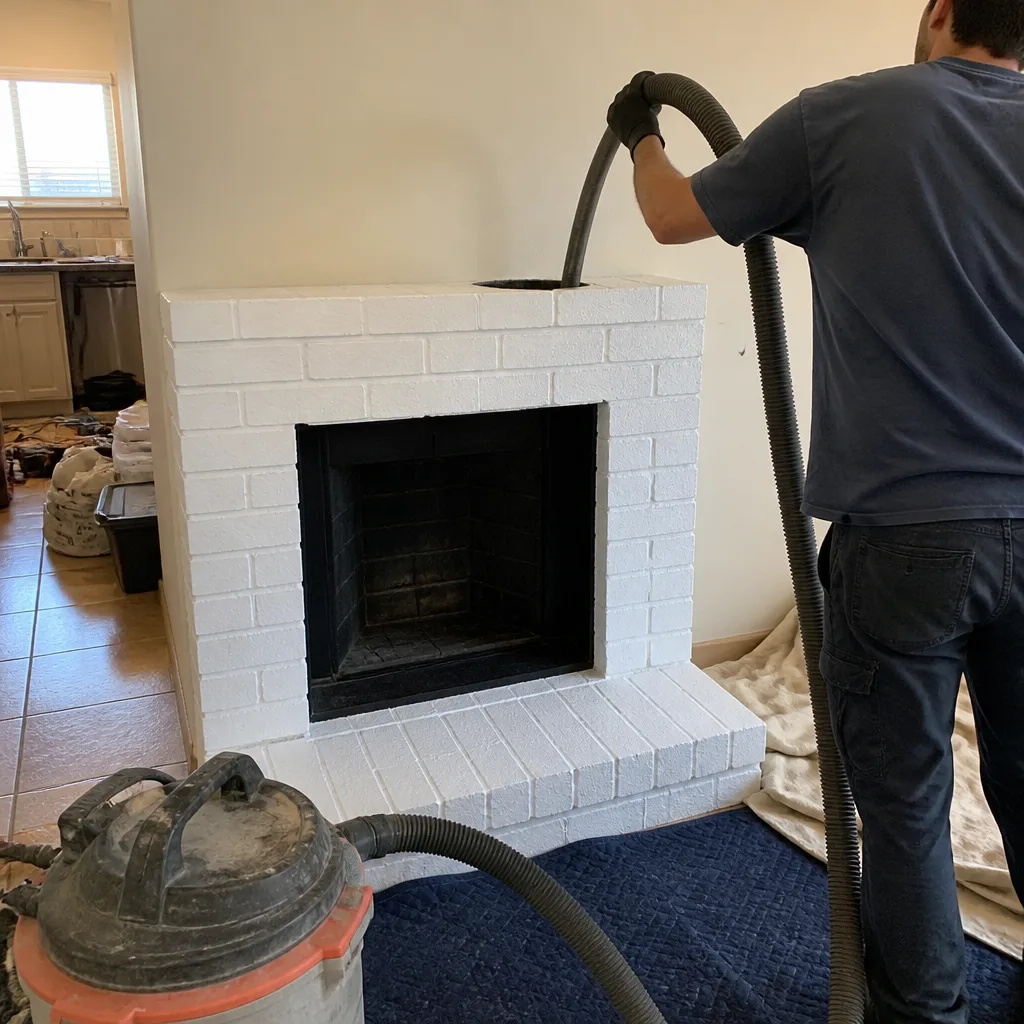
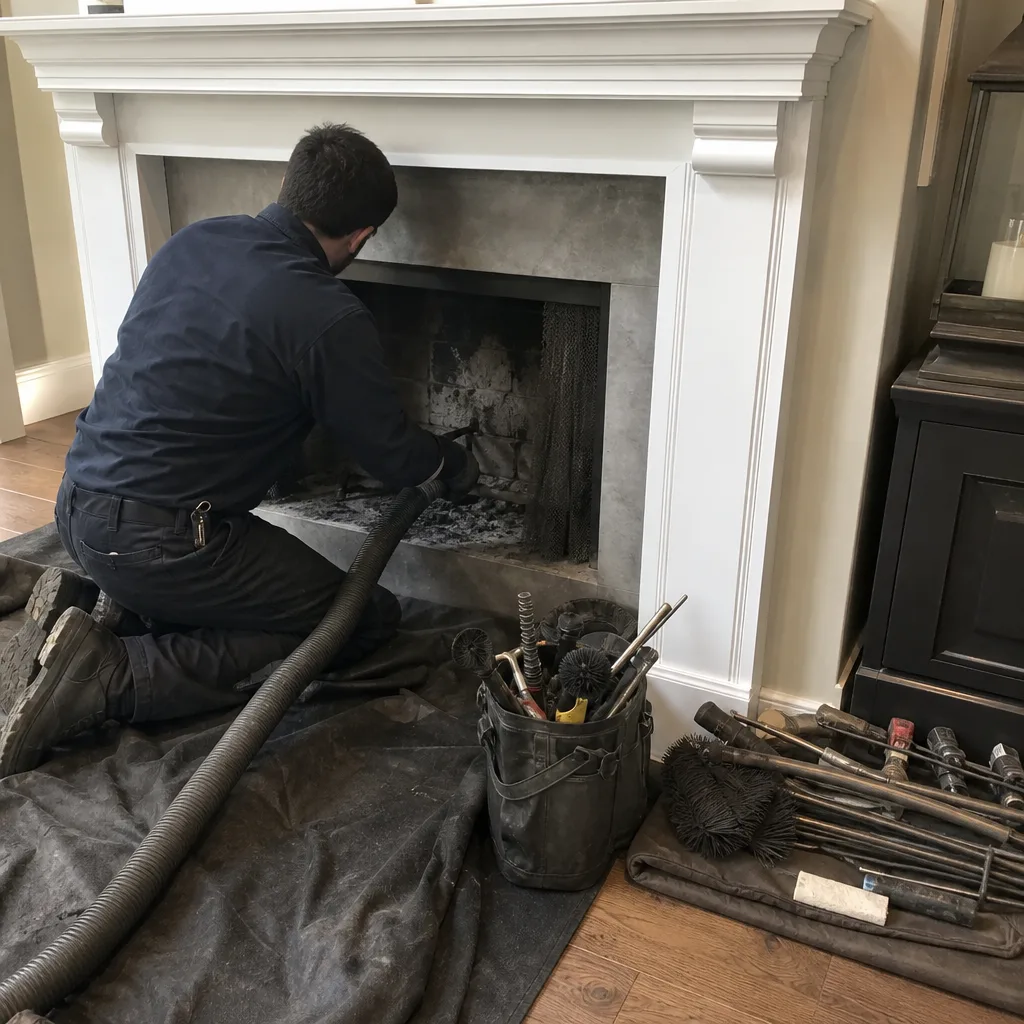
See the difference
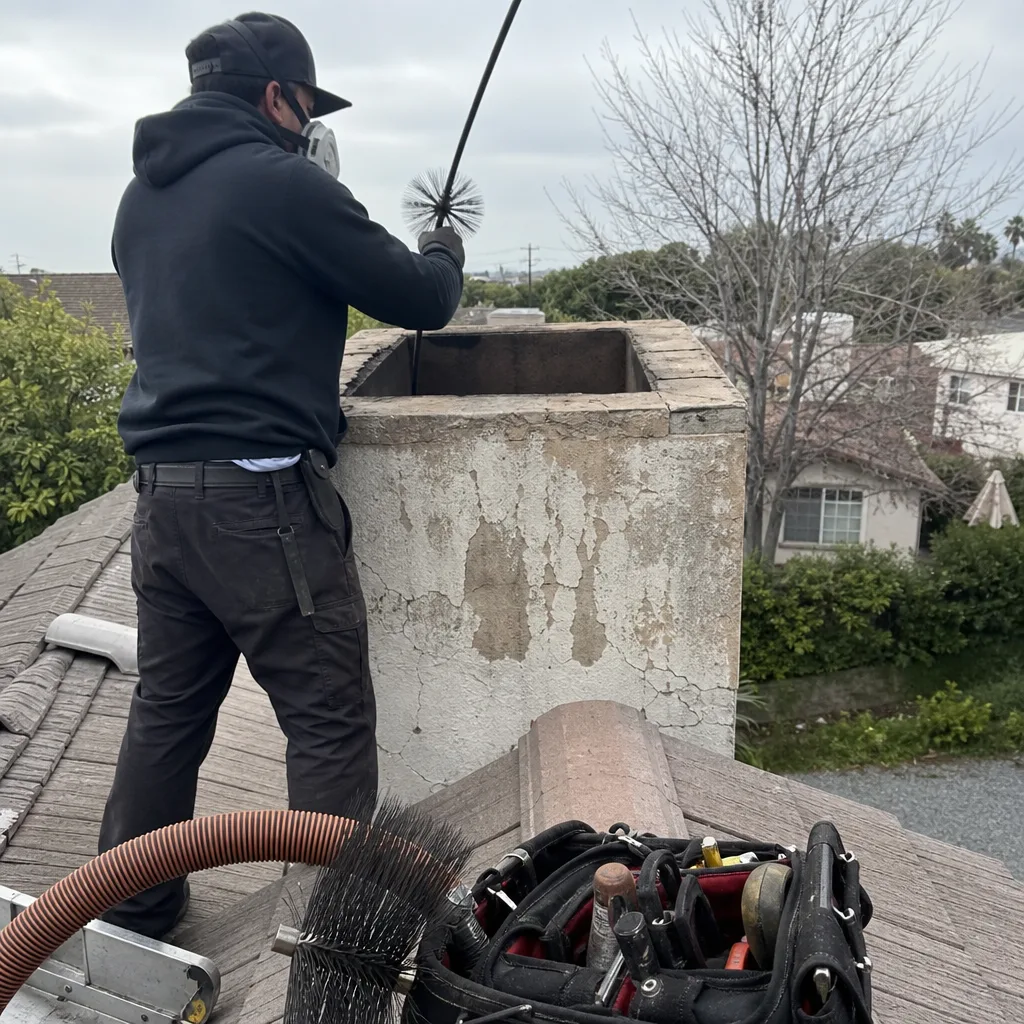 Before
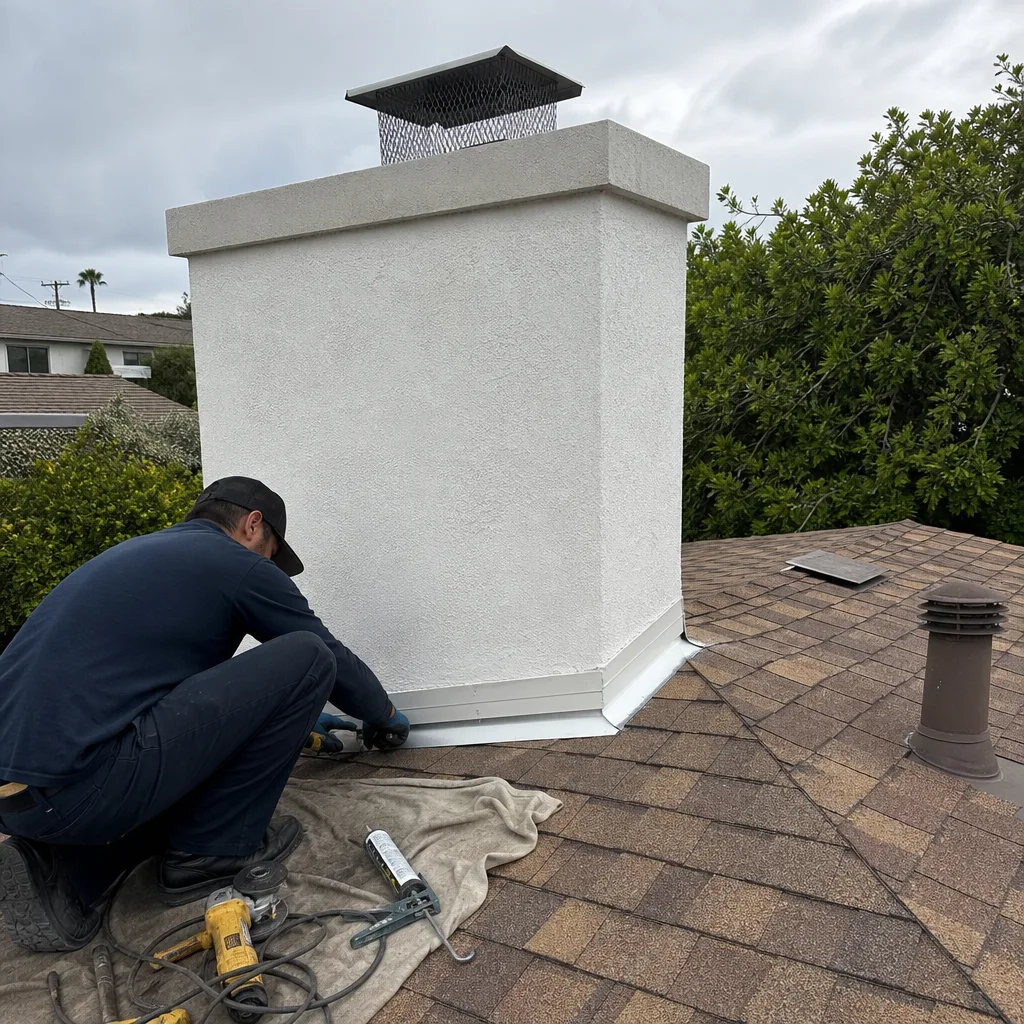 After
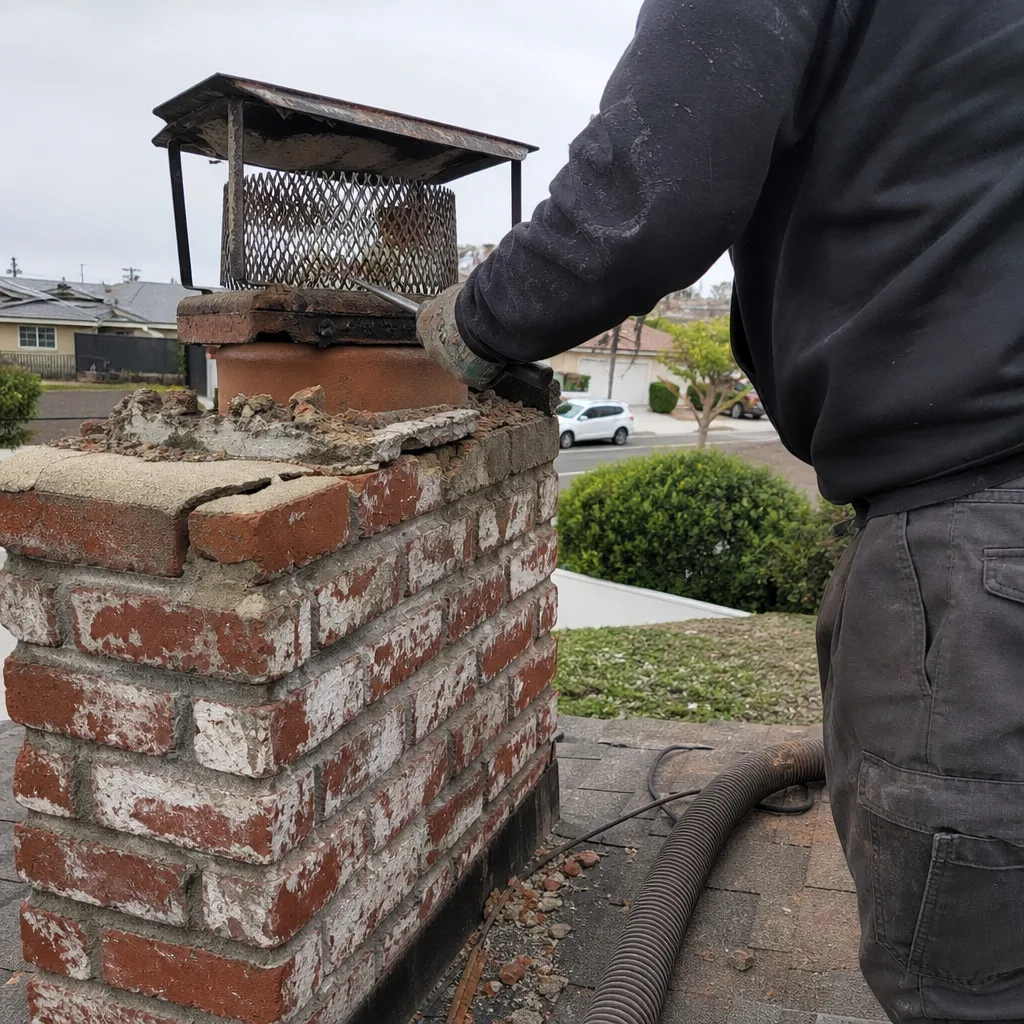 Before
 After
 Before
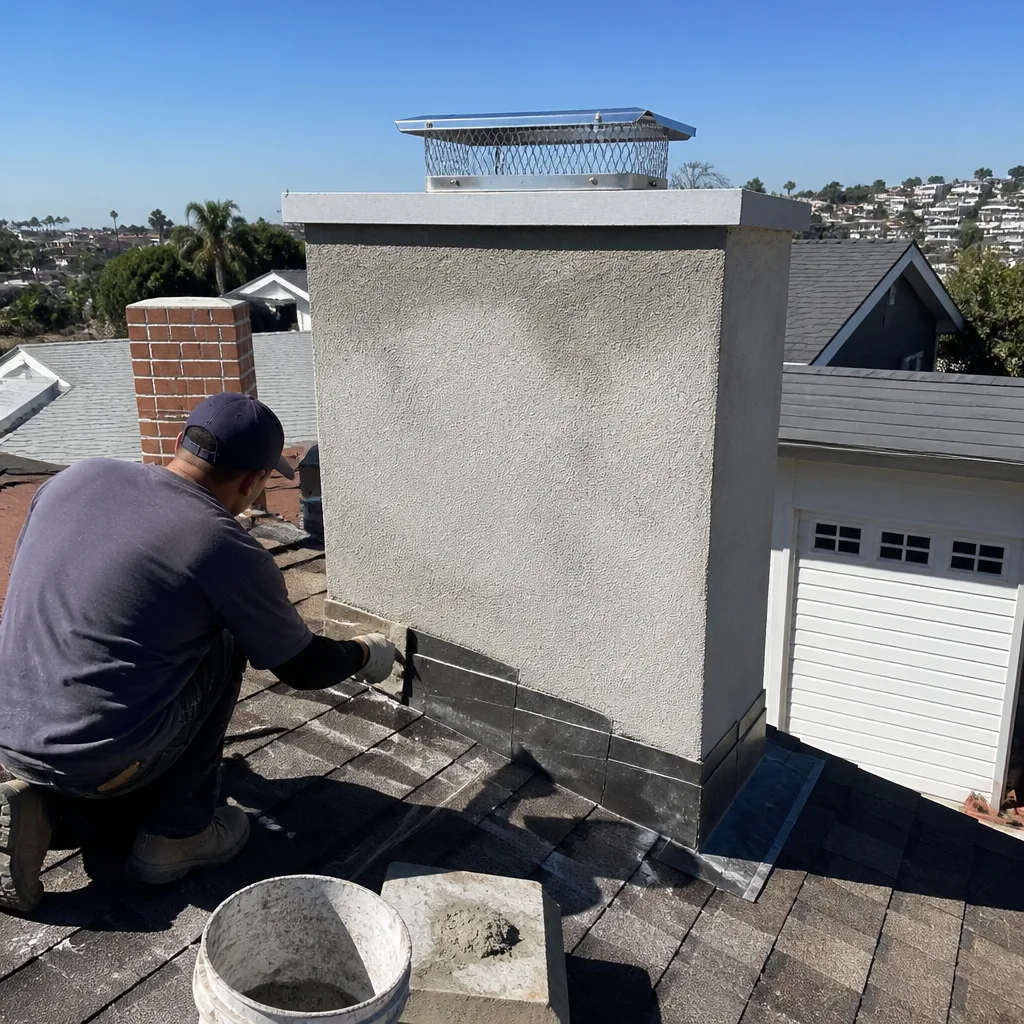 After
When to Call a Professional
Call a chimney professional when any fail criteria on this checklist turn up: a rusted or missing cap, crown cracks wider than 1/8 inch, a damper that won’t seal, spalled brick or missing mortar, smoke rollback during burns, a dryer that won’t finish a load in one cycle, or any musty smell coming from the firebox. Also call if you’ve just moved into a Redondo Beach home and have no record of the chimney’s service history. A camera inspection establishes a baseline and is the cheapest protection against hidden liner damage. Chimney Sweep Redondo Beach offers free estimates in Redondo Beach. Call (866) 632-1088 to schedule a sweep, camera inspection, or dryer vent cleaning.
Frequently Asked Questions
A wood-burning chimney should be swept once per year, or after every cord of wood burned, whichever comes first. Gas chimneys can typically go two years between sweeps, though an annual camera inspection is still recommended. Redondo Beach’s mild climate means homeowners burn fewer months than inland areas, but the salt-air moisture accelerates deterioration of the components even when the fireplace sits unused. The sweep prevents fire risk. The inspection catches corrosion. One annual visit does both.
Expect $180 to $340 for a standard sweeping of an open-hearth fireplace in this market. Homes with unusually tall chimneys, heavy creosote accumulation, or hard-to-access roofs may run higher. A camera inspection is typically $100 to $200, often bundled with the sweep. Call (866) 632-1088 for a free estimate based on your chimney’s height and access, and ask about pairing the sweep with a dryer vent cleaning to combine the service call.
You can check the exterior masonry from the ground with binoculars, and you can assess the damper from inside the firebox. Everything inside the flue above the damper is inaccessible without a camera, and everything on the crown and cap requires either roof access or a drone. If you’re not comfortable on a steep roof, particularly on some of the hillside homes in west Redondo Beach, leave the high work to a professional. The critical issues, like cracked flue tiles and hidden creosote, are only findable with equipment anyway.
You need a new liner if the existing one is cracked, spalled, separated at the joints, or deteriorated to the point that it can’t safely contain the flue gases. This is not a guess. Camera footage will show the damage, and a reputable technician will walk you through the images. In many cases, HeatShield resurfacing can restore the existing liner without demolition, and a DuraFlex stainless liner can be installed as a new, code-compliant flue inside the old one. Both are cheaper than a full chimney rebuild and both are validated with a post-installation camera scan. Get the evidence before you approve anything.
Salt-air corrosion of the cap and crown. The combination of morning fog, ocean breeze, and repeated wet-dry cycling attacks these components more aggressively in Redondo Beach than in any inland Southern California community. Most of the chimney repairs we do in this service area trace back to a cap or crown that failed and allowed moisture into the flue over two or more seasons. The fix is cheap when caught early and expensive when it’s not.
Yes, and here’s why. Both systems are exhaust passages that collect combustible material, both are hidden from daily view, and both have the same pattern of neglect by homeowners. We scope and clean both in a single visit with the same camera equipment. The added cost is modest, and it establishes a single service baseline for your home’s two fire-hazard vent systems rather than leaving one to chance.
The Bottom Line
Redondo Beach’s chimney maintenance calendar follows fog and salt air, not freezing temperatures. Check the cap and crown twice a year because those fail first in this climate. Check the damper from your living room, check the masonry from the ground, and count on a camera inspection once a year for everything you can’t see. Document it all. The homes that avoid $5,000 chimney repairs in this city are the ones where someone noticed a hairline crack early and sealed it, or replaced a rusted cap before it rained, or scoped a dryer vent before it ignited. One call covers your chimney and dryer vent, one camera gives you the evidence, and one annual visit keeps both systems from surprising you.
Written by the team at Chimney Sweep Redondo Beach, serving Redondo Beach since 2017.