
Last updated November 2, 2026
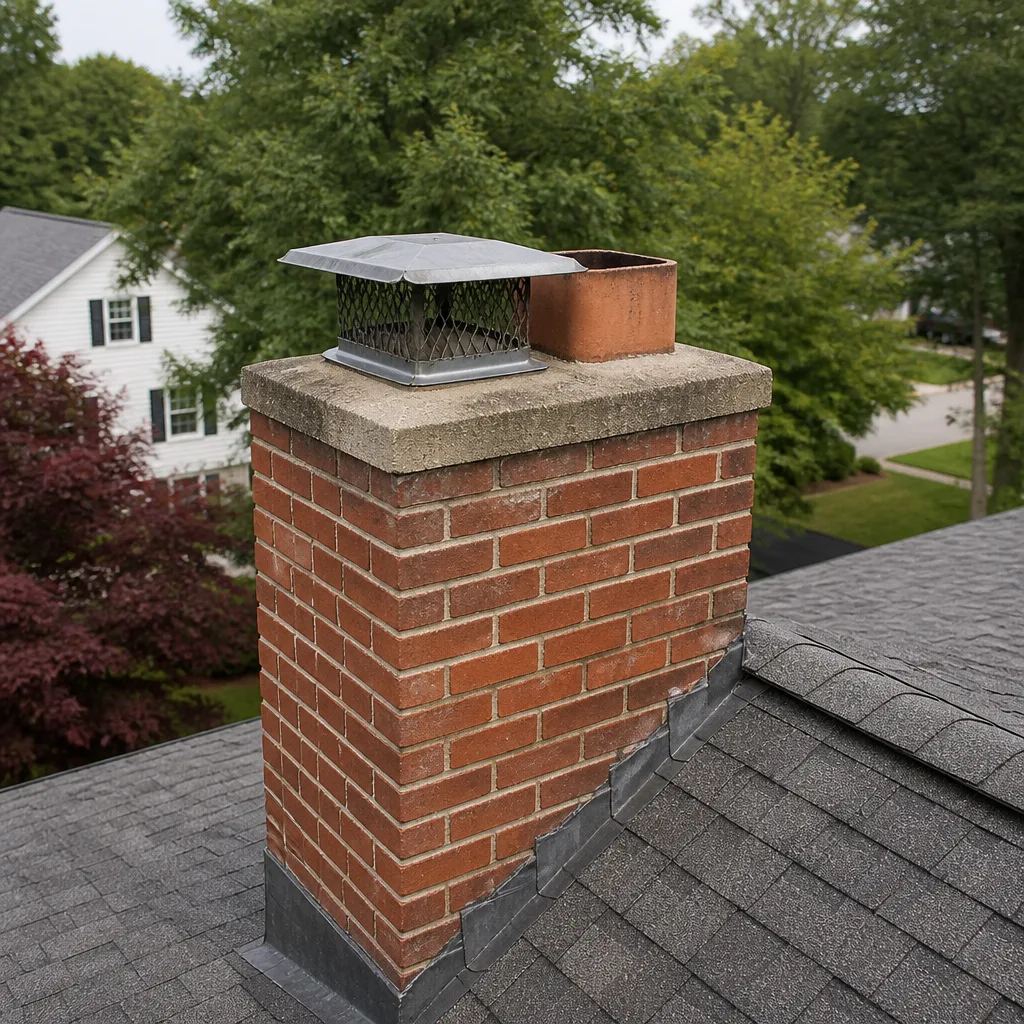 Sweep & inspection
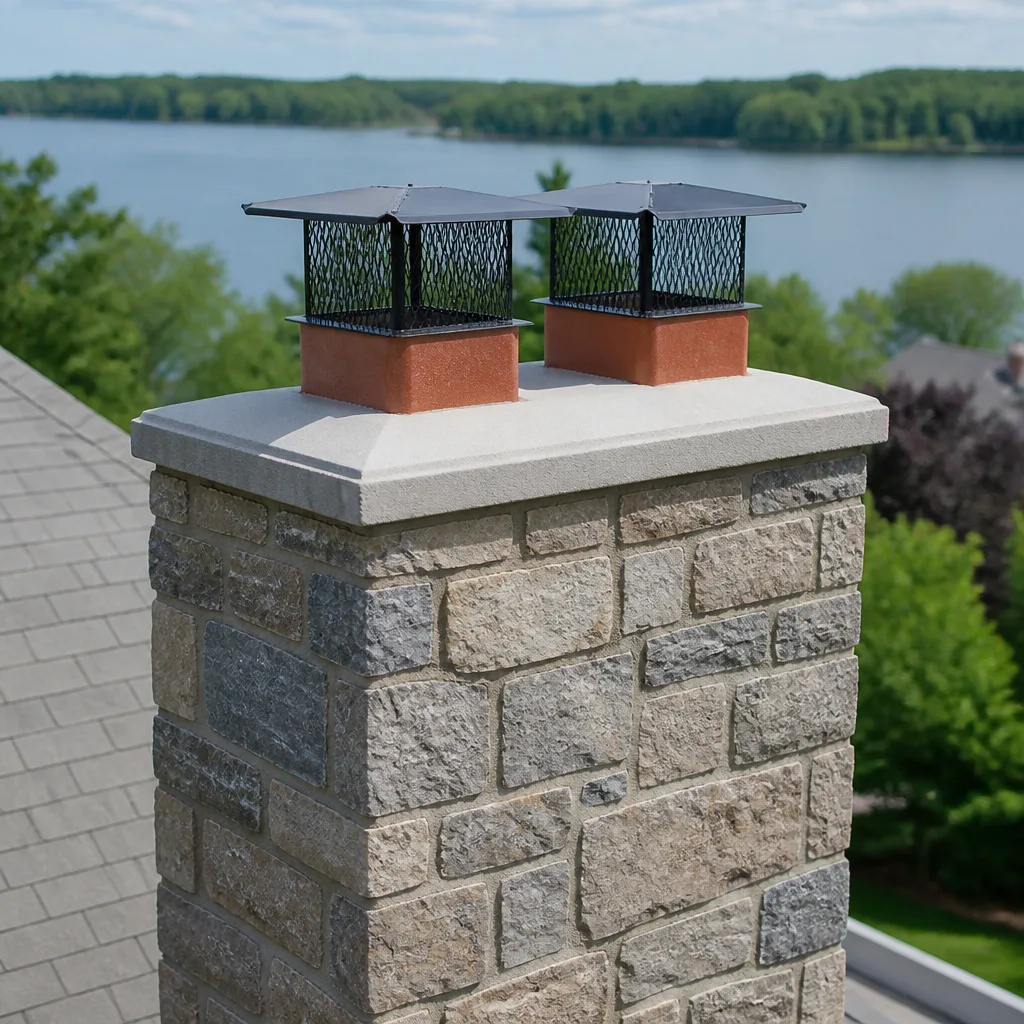 Caps & crowns
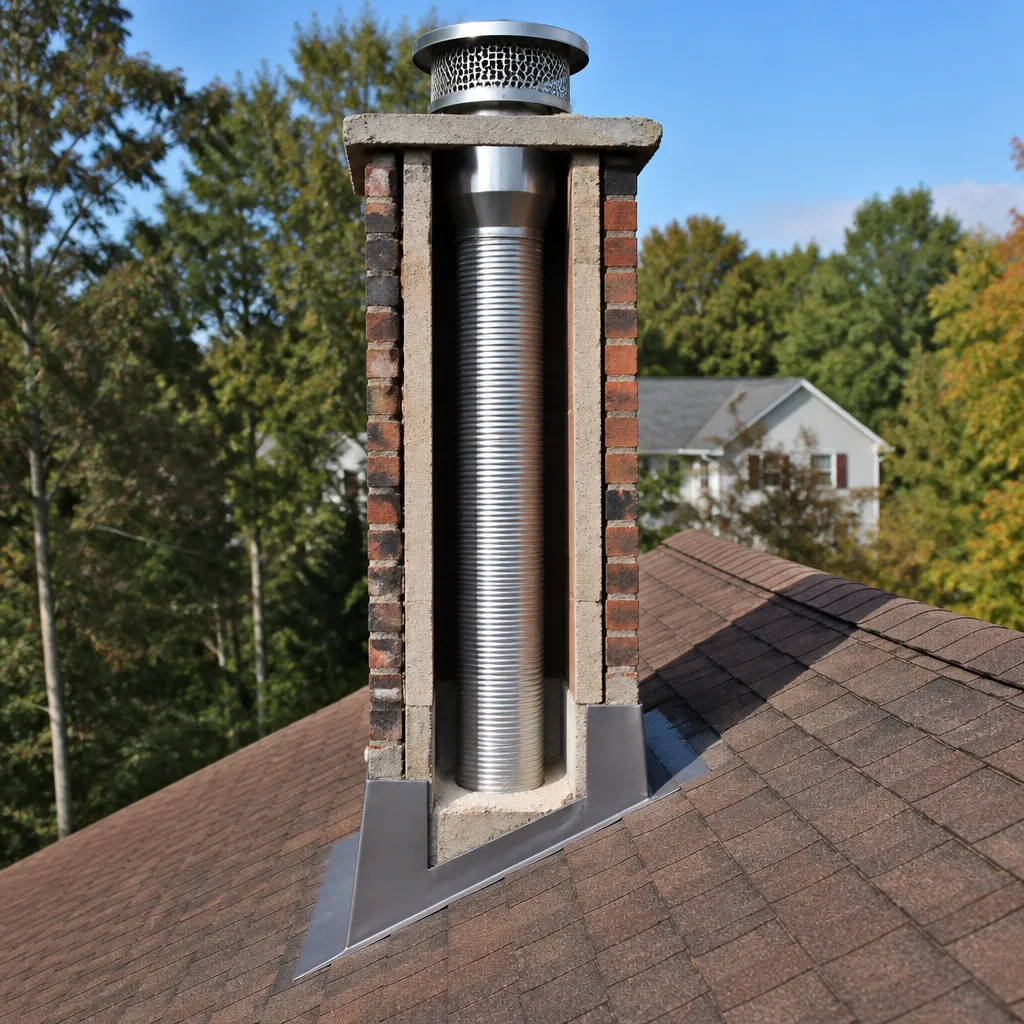 Flue relining
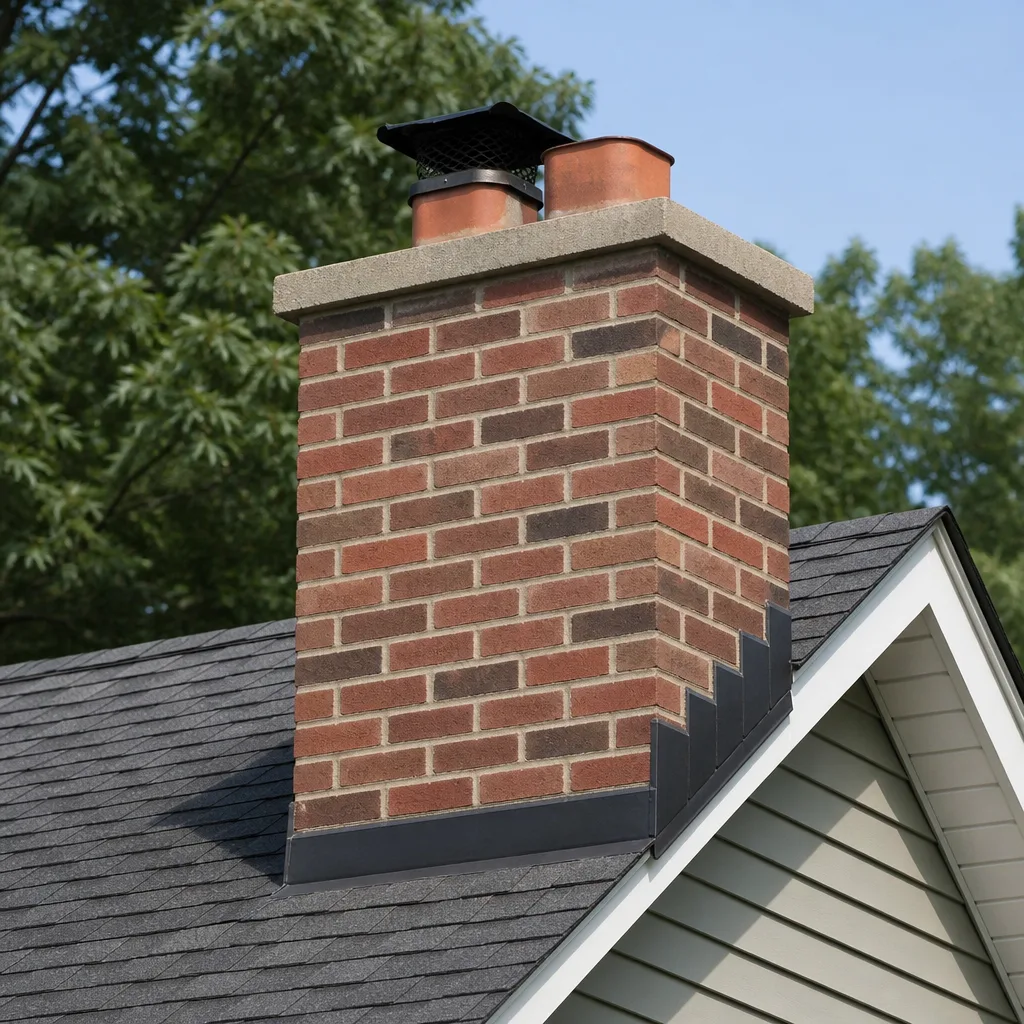 Masonry repair
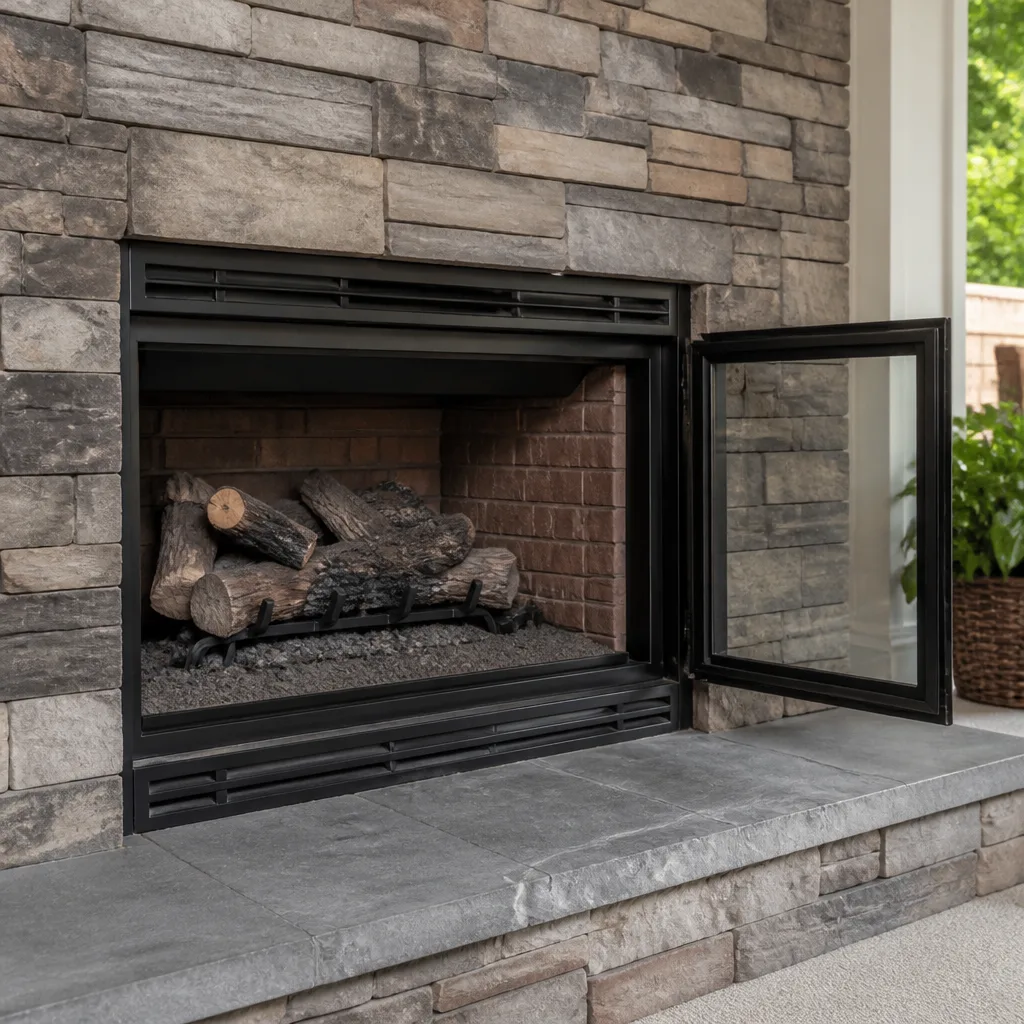 Gas fireplace service
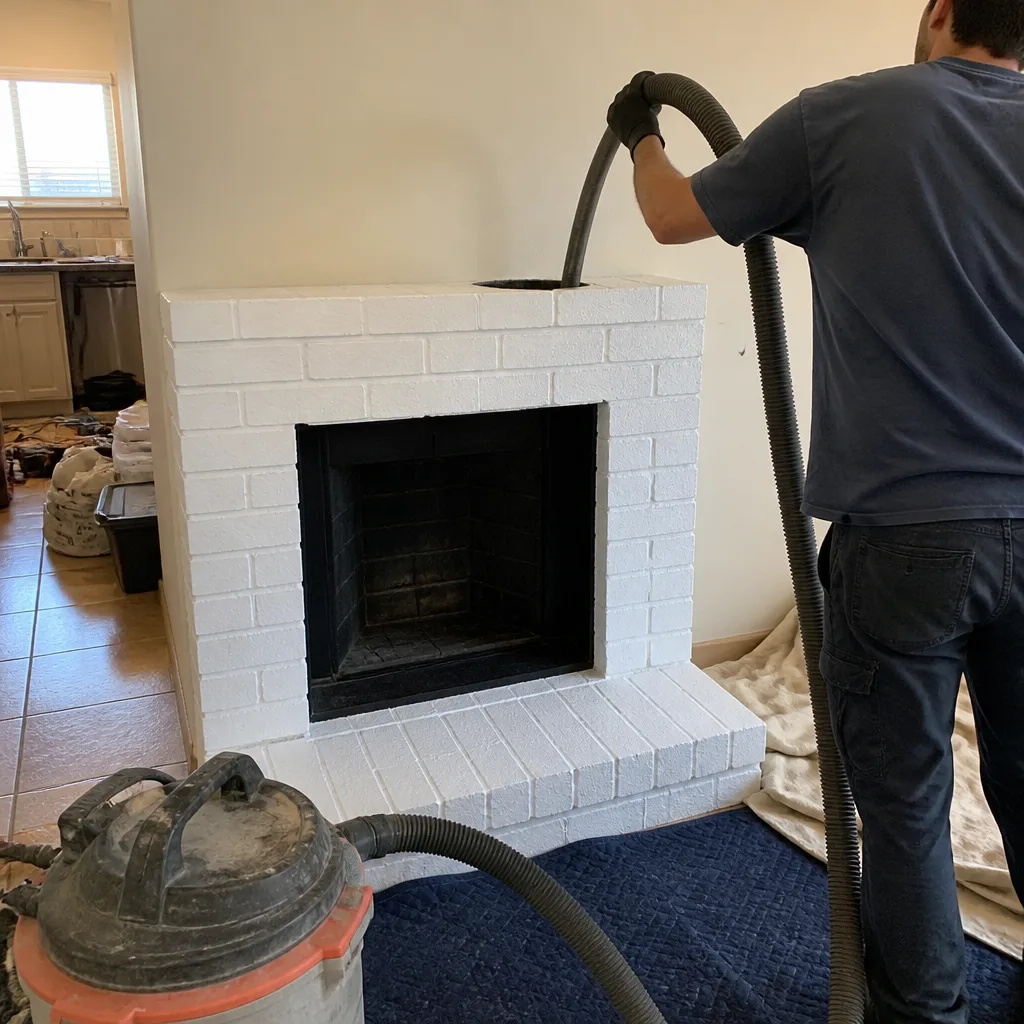
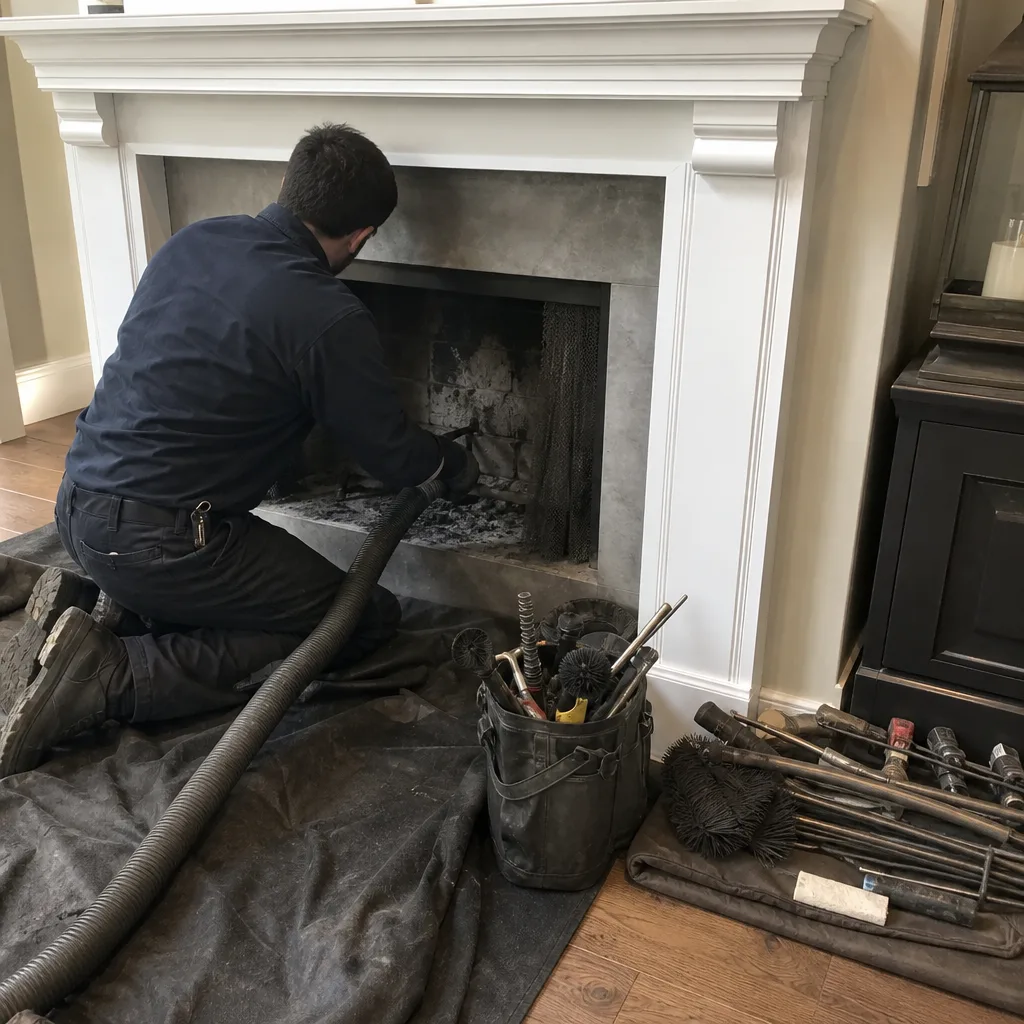
Level 1 sweep and inspection to the NFPA 211 annual standard - flue, crown, cap, and flashing checked and photographed
Chimney sweep logs do not sweep chimneys. They loosen some creosote - which then falls where a brush and vacuum still have to collect it.
Chimney Cleaning Warning Signs: A Redondo Beach Homeowner’s Reference Guide
Most chimney warning sign guides fail because they describe symptoms so advanced the damage is already expensive. A cracked flue liner, a smoke-filled living room, a chimney fire that’s already happened. By the time you’re seeing those, you’re writing checks. This guide is built around the early-stage signals specific to Redondo Beach homes, the kind you notice before the smoke or the repair bill, organized by where in the house you’ll see them first. For a deeper dive into prevention, see our Chimney Sweep Maintenance Checklist for Redondo Beach Homeowners. You’ll learn what to look for in the firebox, the attic, the exterior brick, and the dryer vent, and more importantly, which signs mean schedule a sweep and which mean stop using the fireplace today.
Styles & brands we work with
- Sweep & inspection
- Caps & crowns
- Flue relining
- Masonry repair
- Gas fireplace service
Quick Answer
The earliest chimney warning signs in Redondo Beach are usually a persistent musty smell near the fireplace, a white powdery stain on exterior brick (efflorescence), and visible rust on the chimney cap or damper. If you notice any of these, schedule a chimney inspection before the next burn; if you smell acrid smoke indoors during use or see flaking masonry inside the firebox, stop using the fireplace until a professional has looked at it.
Table of Contents
- The Fireplace Surround: What You’ll See First
- What the Attic Tells You Before Anywhere Else
- Exterior Brick and Mortar: Coastal Warning Signs
- The Smell Diagnostic: Three Odors and What They Mean
- Adjacent Walls and Ceilings: Moisture Migration Patterns
- Dryer Vent Warning Signs You Shouldn’t Ignore
- Action Thresholds: Monitor vs. Stop Using Today
- Common Mistakes to Avoid
- When to Call a Professional
- Frequently Asked Questions
- The Bottom Line
The Fireplace Surround: What You’ll See First
This is where most homeowners look, but usually for the wrong things. You’re watching for smoke blowback or a chimney fire. Those are late-stage failures. The early signals are quieter.
Start with the damper plate. It sits just above the firebox opening, and in Redondo Beach’s salt air, it’s often the first metal component to show corrosion. Look for rust-colored streaking or a whitish crust forming on the plate edges. A damper that’s stiff to operate or won’t seal completely isn’t just annoying, it’s a clue that the metal has warped from moisture exposure. That moisture doesn’t come from nowhere. It means water is getting past the cap or through the crown, and it’s been doing it for a while.
Next, examine the firebrick at the back and sides of the firebox. In a healthy chimney, these bricks are a uniform color, usually buff or reddish depending on the original material. Watch for these three changes:
- Spalling: Thin flakes or shards of brick on the firebox floor. The bricks are shedding surface layers under heat stress. This means the masonry is compromised.
- White staining on interior brick: In a coastal climate like Redondo Beach, this can occur on interior firebox brick when water has saturated the flue and is working its way outward. It looks like a dusting of chalk.
- Mortar joints that crumble to the touch: Run a finger along the joints (when the fireplace is cold, obviously). If the mortar feels sandy or gritty and comes away on your finger, the firebox has absorbed too much moisture and is losing structural cohesion.
We’ve seen fireboxes in South Redondo, particularly older bungalows near the Esplanade, where the firebrick looks fine until you actually touch it, then the surface just crumbles. That’s a sign of years of coastal moisture cycling, and it’s a repair that should be addressed before further heat exposure causes deeper damage.
If you’re seeing any of these firebox signals, a Chimney Sweep in Redondo Beach can assess whether the damage is cosmetic or structural before you burn again.
What the Attic Tells You Before Anywhere Else
Most Redondo Beach homeowners never look at their chimney from the attic side, which is exactly why problems develop there unnoticed. The attic is where the flue passes through an unconditioned space, and it’s the first place heat loss and moisture transfer become visible. If you have attic access, spend five minutes up there with a flashlight. What you find is often the earliest signal in the house.
Here’s a working order for the inspection:
- Turn off the attic light. Darkness makes gaps and light leaks visible.
- Look at where the flue pipe or chimney mass passes through the roof decking. If you see daylight around the flashing, the chimney flashing has failed or is failing. In Redondo Beach, wind-driven rain from winter storms pushes water into these gaps even when the leak doesn’t show inside yet.
- Run your hand along the chimney chase or brick surface. Dampness, dark staining, or a musty smell are direct evidence of water entry.
- Check the ceiling joists and roof sheathing within three feet of the chimney. Discoloration, streaking, or soft spots in the wood indicate moisture has been tracking along the structure, not just through the opening.
- Look for small piles of sandy material at the base of the flue. This is eroded mortar and brick dust settling out. Flue deterioration often shows here first because gravity carries loose material to the lowest point.
One thing we hear from homeowners in the Golden Hills neighborhood is that the attic always smells a little musty, so they assume it’s normal. It isn’t. A dry, properly ventilated attic with intact chimney flashing has no smell at all. Persistent mustiness around the chimney chase is a moisture entry signal, even if you never see a visible drip.
Exterior Brick and Mortar: Coastal Warning Signs
Redondo Beach’s climate does things to chimney masonry that don’t happen in Pasadena or the Valley. The combination of marine humidity, salt aerosol, and afternoon sun on the west-facing chimney surfaces creates a unique moisture cycling pattern. The warning signs show up earlier and progress faster.
Efflorescence: That white powdery stain on chimney brick isn’t cosmetic. It’s mineral salt being deposited on the surface as water migrates through the masonry and evaporates. The water enters through the crown, cap, or flashing, dissolves salts inside the brick and mortar, and deposits them on the surface when it exits. In Redondo Beach’s coastal humidity, efflorescence often shows up 12 to 18 months before structural spalling begins. The stain is the advance team. The crumbling brick follows.
Rust streaking: Orange or brown streaks running down from the chimney cap, damper housing, or flashing indicate that galvanized or painted steel components are corroding. Salt air accelerates this. You’ll see it first on the side of the chimney that faces the prevailing breeze, usually the south or southwest face in Redondo Beach.
Spalling brick: When bricks lose their face, the flat outer surface, and expose a rough, porous interior, that’s spalling. Water has saturated the brick, and the freeze-thaw cycle or salt crystallization has popped the surface off. In coastal Southern California, it’s rarely freezing, but salt crystallization does the same work. The exposed inner brick absorbs water even faster. Spalling on the chimney exterior is a signal that water has been moving through the structure for years, not months.
Deteriorating mortar joints: Run your finger along the mortar between bricks. If it’s recessed more than a quarter inch from the brick face, or if it crumbles when rubbed, the chimney needs repointing. This is structural. The mortar is what holds the chimney together, and in earthquake country, a compromised mortar bed is a greater risk than most homeowners realize. Redondo Beach is close enough to the Newport-Inglewood fault that we take masonry integrity seriously.
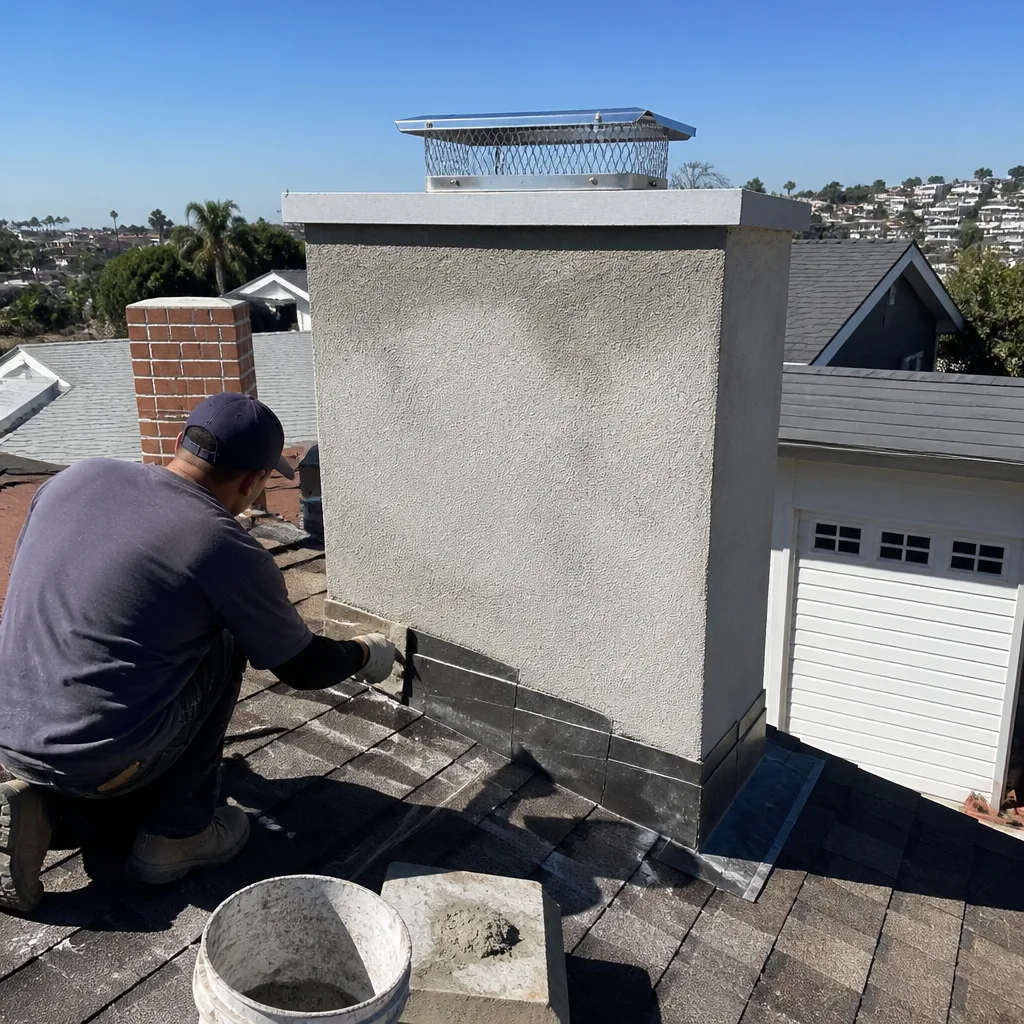
For exterior damage, a Chimney Repair in Redondo Beach is often needed. We install Gelco caps and use Olympia Chimney components when hardware needs replacement because they hold up better in salt-air environments than the standard stamped steel caps sold at home centers.
The Smell Diagnostic: Three Odors and What They Mean
Chimney odors are diagnostic if you know what you’re smelling. Most people lump them all into “the fireplace smells weird,” but each distinct odor points to a different failure type. Here’s what we’ve learned from years of diagnosing chimney odor complaints in Redondo Beach homes.
The Musty Smell
That damp, basement-like odor coming from the fireplace, especially in humid weather or after rain, means water is entering the flue. It could be through a failed cap, a cracked crown, or failed flashing. The moisture soaks into the creosote deposits inside the flue and the masonry itself. When the air warms, the smell releases into the house. In Redondo Beach, the worst months for this are typically late summer and early fall, when the marine layer sits over the South Bay and the air is heavy. Musty odor is a monitor-and-schedule signal. You don’t need to stop using the fireplace immediately, but you do need a chimney inspection to locate the water entry before the next burn season.
The Acrid or Smoky Smell
An acrid smell, like burnt wood ashes that never dissipated, occurs when the chimney draft reverses and pulls combustion gases back into the house. For help diagnosing this and similar issues, see our Chimney Sweep Troubleshooting: Common Problems and How to Fix Them. A properly drafting chimney moves air up and out. When you smell acrid air near the fireplace even when no fire has burned recently, the flue is blocked, the damper is leaking, or the flue liner has deteriorated to the point where draft is compromised. In some Redondo Beach neighborhoods, tightly sealed homes with double-pane windows can also create a negative pressure situation that worsens draft reversal. An acrid smell is a strong signal that combustion products are entering your living space, and that is a stop-using-and-schedule-today situation.
The Sulfur-Like Smell
A sulfur or rotten-egg smell around a wood burning fireplace is unusual and worth paying attention to. It often indicates organic matter decomposing inside the chimney. Animals nesting in the flue, leaves that have accumulated and started to rot, or in some cases, a creosote accumulation that has absorbed moisture and is hosting bacterial growth. Chimney swifts, raccoons, and squirrels in Redondo Beach all use chimneys as nesting sites, and a blocked cap is an open invitation. A sulfur-like smell usually means something organic is in the flue and needs to come out. If you hear scratching or bird sounds along with the smell, active wildlife is present, and it needs to be handled before sweeping.
Adjacent Walls and Ceilings: Moisture Migration Patterns
Chimneys don’t always leak straight down into the firebox. Water entering at the roof line can travel horizontally along joists, down wall cavities, and show up in places that seem completely disconnected from the chimney. If you’re seeing water stains on a ceiling or wall that isn’t directly under a plumbing fixture, the chimney is a likely suspect.
Look for these specific patterns:
- Brown water stains on the ceiling near the chimney chase. These may not be directly adjacent to the chimney. Water can run along a roof rafter and drip 6 to 10 feet away from the actual entry point.
- Staining on interior walls that share a chase with the chimney. In single-story Redondo Beach ranch homes, the wall immediately adjacent to the chimney is often a collection point for migrating moisture.
- Bubbling or peeling paint on ceilings below attic level. This often indicates moisture trapped between the drywall and paint, and when it appears in a room adjacent to the chimney’s path, the chimney is the first thing to rule out.
- A persistent damp spot on carpet or wood flooring near a wall that backs to the chimney. Gravity eventually brings water down. The floor-level dampness is the final stop for water that entered at the roofline and traveled through the wall void.
One specific Redondo Beach consideration: older homes in the Avenues and the TRW tract often have shared chimney structures between fireplaces in adjacent rooms or between the fireplace and the furnace flue. Water entering one flue can present in a completely different room than the one with the fireplace. If the stain location doesn’t match your understanding of the chimney’s location, check the attic to confirm the flue’s actual path.
These moisture migration signs are the same ones we look for when doing a full assessment. A thorough check of the Chimney Sweep Redondo Beach home covers the firebox, the flue, and the exterior chasing, so no entry point gets missed.
Dryer Vent Warning Signs You Shouldn’t Ignore
Chimneys and dryer vents share more than you might think. Both are vertical or semi-vertical flues that exhaust combustion byproducts or moisture and lint. Both accumulate deposits over time. Both are far more dangerous when restricted than most people believe. In Redondo Beach, where many homes have laundry areas in attached garages or interior closets with long vent runs, dryer vent restriction is a significant fire hazard that often shows warning signs long before it becomes dangerous.
Here’s what a restricted dryer vent looks like before it fails:
- Clothes taking longer to dry. If a load that used to dry in 45 minutes now takes 70 or 80, the vent is restricted. Air isn’t moving, so moisture is being removed by the dryer’s heat alone, not by airflow.
- The dryer exterior surface runs hotter than normal. The heating element is working, but the air can’t carry the heat away. A hot dryer surface is a sign that the machine is retaining heat that should be leaving through the vent.
- The laundry room feels warm and humid during a dry cycle. That humidity is the moisture that should be venting outside. It’s leaking into the room instead.
- A burning smell while the dryer runs. Lint that has accumulated near the heating element or blower motor is smoldering. This is not a subtle warning. Stop the dryer and address the vent.
- Lint visible on the outside vent hood. A properly venting dryer pushes lint all the way out. A restricted vent leaves lint deposits in the duct, and some will show on the hood or the ground around it.
Most dryer vent fires involve lint accumulated where you can’t see it, deeper in the duct run. The signs above are the advance warning. We use Famco vent products when repairing or replacing dryer vent components because the cap, the hood, and the transitional duct all matter. A cheap vent cap lets rain in or fails to seal properly, and the restriction problem becomes a moisture problem too.
Chimney and dryer vent cleaning are the same discipline: removing combustible deposits from a flue before they accumulate to a dangerous level. If you haven’t had the dryer vent cleaned in two or more years, a Dryer Vent Cleaning in Redondo Beach is cheap compared to the alternative.
Action Thresholds: Monitor vs. Stop Using Today
Not every warning sign means the same thing. Some are signals to monitor and schedule a service at your convenience. Others mean the fireplace or dryer should not be used again until a professional has inspected the system. Making the distinction clearly is the difference between a manageable maintenance item and a fire in your chimney chase.
Monitor and schedule within 30 days:
- White efflorescence staining on exterior brick
- Musty odor near the fireplace
- Rust streaking on the chimney cap or damper
- Crumbling mortar joints on the exterior
- Damper that’s stiff to operate but still seals when closed
- Dryer loads taking noticeably longer than they used to
- Attic moisture staining around the chimney chase with no active drip during rain
These are early-stage signals. The damage exists, but the systems are still functional. A Chimney Sweep in Redondo Beach can address most of these in a single visit with a cleaning and a proper moisture assessment.
Stop using the fireplace or dryer today and call before using again:
- Acrid or smoky smell indoors during or after a fire
- Visible smoke entering the room when the damper is open
- Flaking interior firebrick that crumbles when touched
- A sulfur-like odor or animal sounds coming from the chimney
- Burning smell while the dryer is running
- Any visible smoke or soot around the dryer vent connection
- Water actively dripping into the firebox during rain
These are not early signs. They are active failures. The system is unsafe in its current state, and every additional burn or dry cycle adds risk. Stop use and schedule the inspection. The technician will determine whether the repair is minor or structural, but the first step is simply not operating the system.
Common Mistakes to Avoid
- Painting over efflorescence. White staining on chimney brick is water movement, and painting over it just traps the moisture. The brick continues to deteriorate under the paint, and you lose the visible signal that tells you how fast the problem is progressing.
- Assuming a musty smell is just the house. In Redondo Beach, where coastal humidity is normal, musty odors are especially easy to dismiss. But a musty smell that’s stronger near the fireplace than elsewhere in the house is pointing at the chimney.
- Waiting for visible smoke before scheduling a sweep. Smoke blowback is a late symptom. By the time you see it, the flue restriction or draft failure is already significant. The cleaning would have been cheaper and the repair smaller if addressed earlier.
- Checking the dryer vent lint trap and calling it clean. The trap catches about 40 percent of the lint produced. The rest travels into the duct. A clean trap is not the same as a clean vent, and the duct is where the fire risk lives.
- Replacing a chimney cap with the cheapest option at the hardware store. Salt air works fast on thin galvanized steel. A cheap cap fails in a few years and often doesn’t seal the flue properly anyway. The cost difference between that and a professional cap like a Gelco unit is small compared to the water damage a failed cap allows.
- Ignoring attic signs because you don’t go up there. The attic is where the earliest evidence lives. Five minutes with a flashlight once a year will catch water entry before it becomes a ceiling stain or a structural issue.
When to Call a Professional
Some of the signs in this guide are things you can monitor, and others are things that require immediate action. If you’ve identified any of the stop-using signals, if you haven’t had a chimney inspection in more than two years, or if you’ve noticed water staining anywhere along the chimney’s path and want an honest assessment of what’s happening before damage spreads, it’s time to call. A professional chimney sweep in Redondo Beach can run a camera inspection, check for hidden moisture entry, and tell you plainly what needs attention now and what can safely wait. Chimney Sweep Redondo Beach offers free estimates in Redondo Beach. Call (866) 632-1088.
Frequently Asked Questions
A standard chimney sweep in Redondo Beach typically runs between $150 and $300 depending on the condition of the flue, the chimney’s height, and whether any animal nests or heavy creosote deposits are present. Repairs like cap replacement, crown sealing, or liner restoration are additional and quoted after an inspection. Call (866) 632-1088 for an exact quote; estimates are free.
The National Fire Protection Association recommends a sweep whenever creosote reaches 1/8 inch of accumulation, and an annual inspection regardless. In Redondo Beach, where fireplaces are used seasonally rather than daily, an annual sweep before burn season is generally sufficient for wood-burning fireplaces that see regular use from November through March. If you burn wet wood or suspect moisture entry, you may need more frequent service.
Not necessarily. Many liner issues that would have meant a full replacement a decade ago can now be addressed with specialized restoration methods. We use HeatShield, a cerfractory sealant system that can restore many damaged flue liners without a full teardown. The only way to know for sure is a camera inspection of the existing liner. If the damage is beyond restoration, an honest assessment will tell you that too.
Creosote, which is a byproduct of every wood fire, accumulates on the flue walls. At 1/8 inch it becomes a fire hazard. A chimney fire can burn at over 2,000 degrees Fahrenheit, hot enough to crack flue liners, warp dampers, and spread to the home’s structure. In Redondo Beach’s wood-frame houses, a chimney fire that escapes the flue is a serious structural fire. The cleaning is always cheaper than the repair, and the repair is always cheaper than the alternative.
That staining is efflorescence, which is mineral salts deposited on the brick surface as water moves through the masonry and evaporates. It’s a sign of active moisture entry through the crown, cap, or flashing. In Redondo Beach’s coastal climate, efflorescence appears earlier and progresses faster than in drier inland areas. The stain itself is not structural damage, but it’s the visible warning that structural damage is on the way.
Yes, though for different reasons than a wood-burning fireplace. Gas fireplaces produce moisture and acidic combustion byproducts that corrode flue materials over time. The chimney still needs annual inspection and occasional cleaning to check for corrosion, nesting animals, and deteriorating caps. A gas fireplace flue in Redondo Beach can suffer significant salt-air corrosion to the cap and damper even when the flue interior stays relatively clean.
Cleaning a chimney yourself involves working at height, handling specialized brushes, and managing creosote dust that’s a respiratory irritant and a known carcinogen. It also doesn’t include the camera inspection that catches liner damage before it becomes dangerous. For high-tension components and height work, a trained professional with the right equipment is the safer path. A professional sweep in Redondo Beach typically takes under two hours and includes the inspection.
The Bottom Line
Chimney problems in Redondo Beach don’t announce themselves with a crash. They show up as a white stain on brick, a musty smell in the living room, a hot dryer that takes too long. This guide exists because the earliest signs are the easiest to miss and the cheapest to fix. Watch the firebox, check the attic, look at the exterior brick before every burn season, and listen to what the smells are telling you. If you see the early signals, schedule a sweep. If you see the late ones, stop using the fireplace until a professional has assessed it. The chimney and the dryer vent are both fire-adjacent systems that reward attention and punish neglect. One call covers both. Call (866) 632-1088 for a free estimate in Redondo Beach.
Written by the team at Chimney Sweep Redondo Beach, serving Redondo Beach since 2017.
See the difference
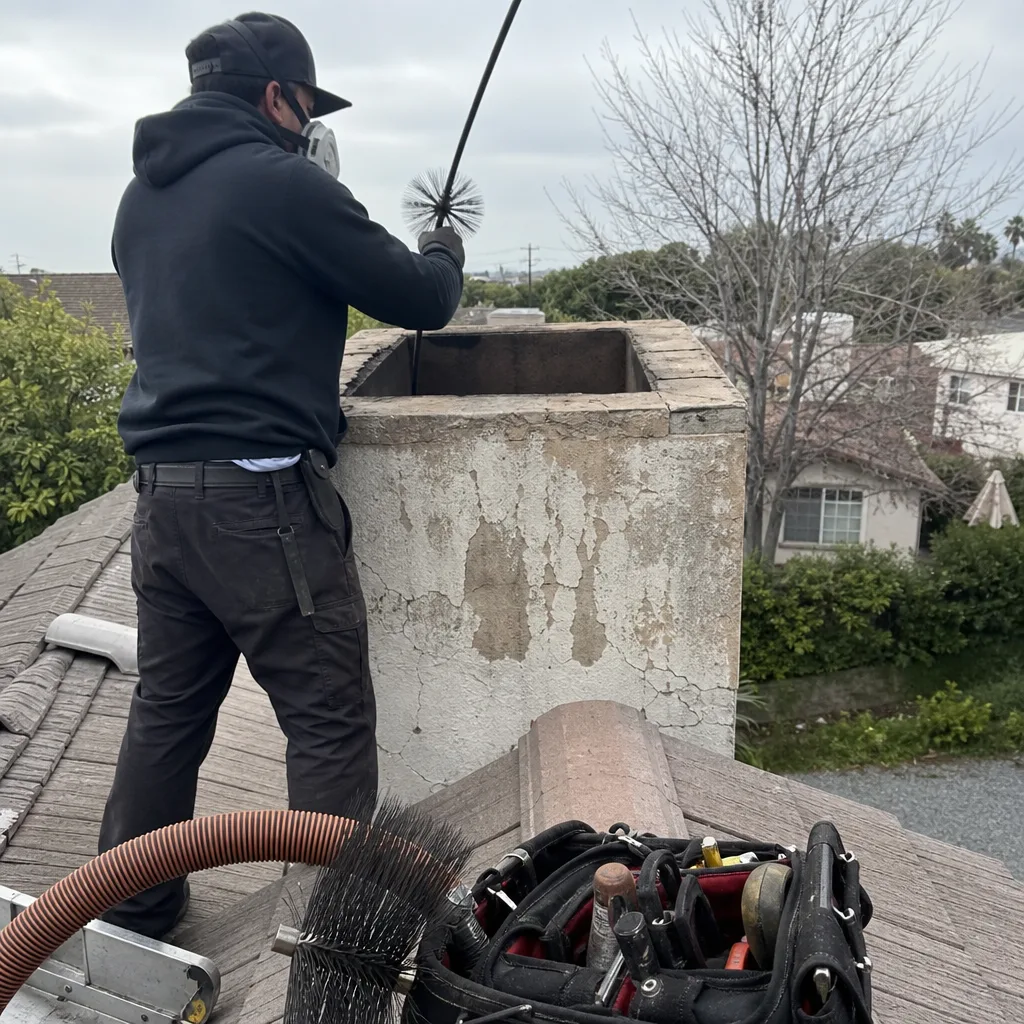 Before
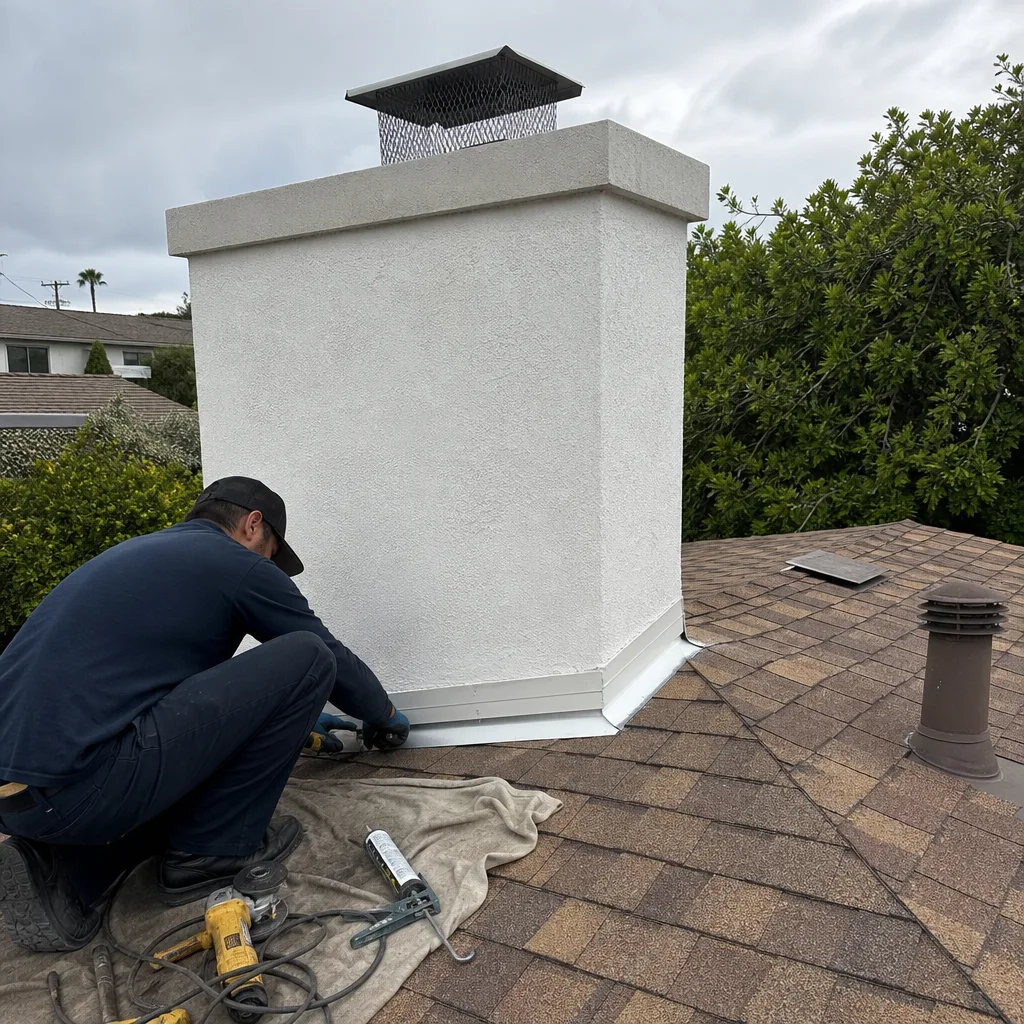 After
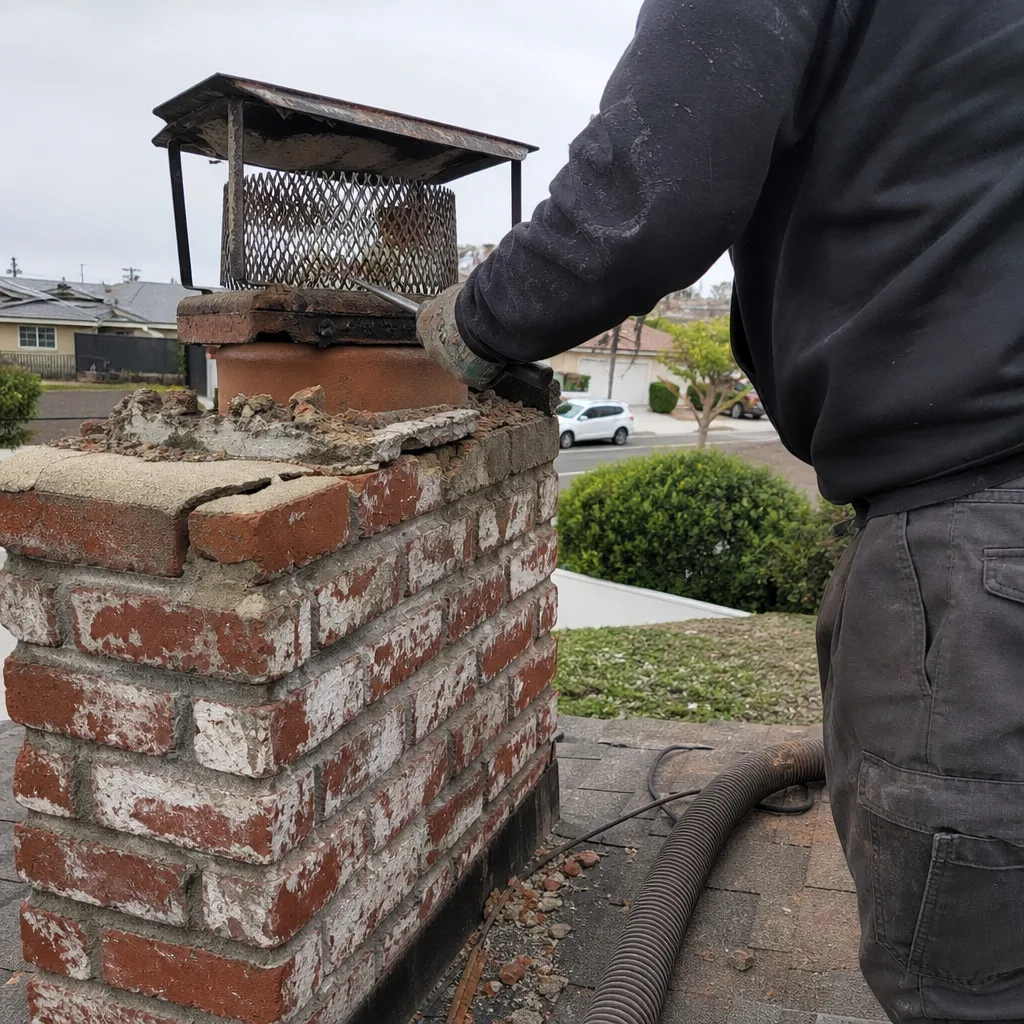 Before
 After
 Before
 After